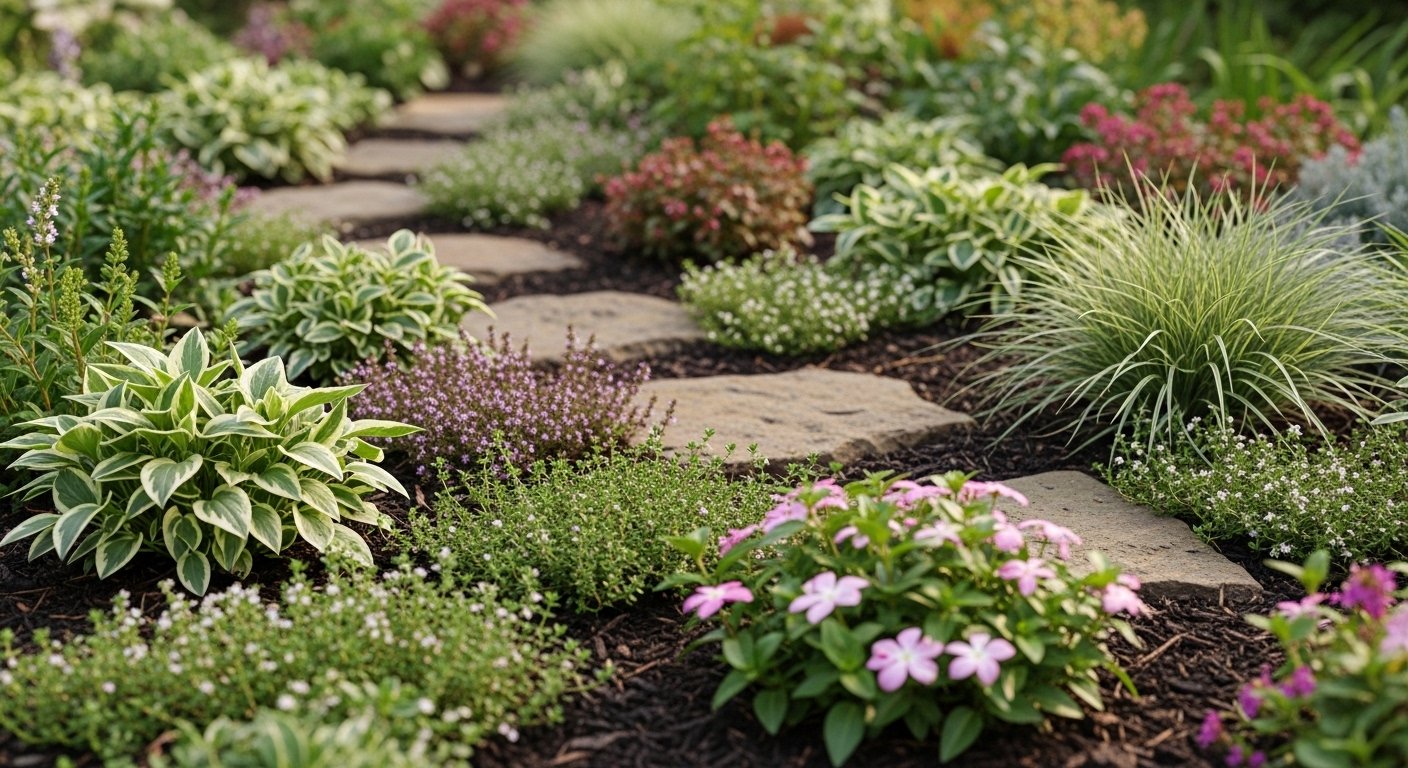
I spent years filling gaps with annuals, then learned how evergreen ground cover plants keep a bed readable in winter. The right groundcover makes the whole garden feel put together, even when shrubs are bare.
These are plants I actually use. Some failed at first. Most came back better than I expected.
29 Elegant Evergreen Ground Cover Plants For Year Round Beauty
These 29 ideas are hands-on ways I use evergreen ground cover plants in real gardens. Each idea includes what I planted, what changed, and exactly what you’ll need.
1. Ajuga Carpet Along a Shady Path
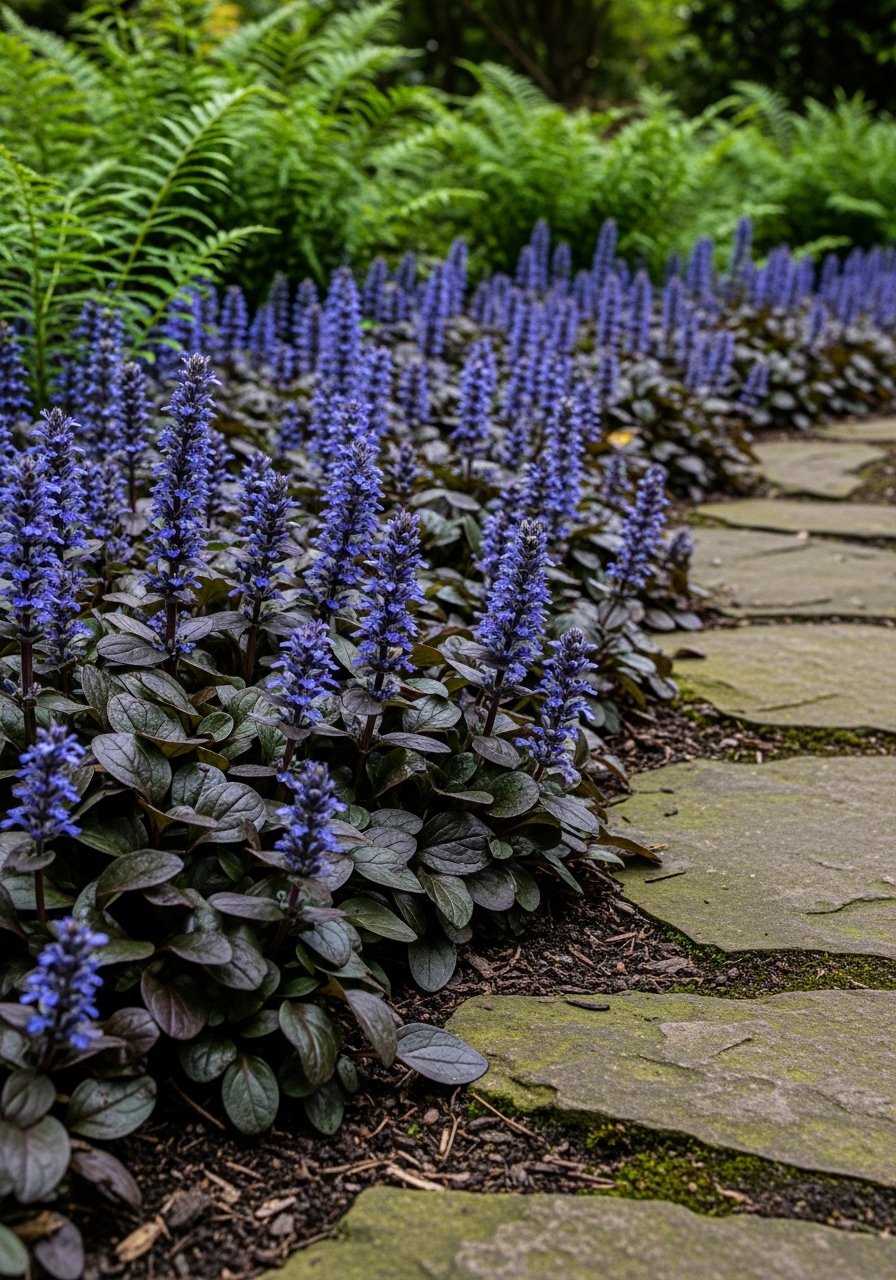
I planted ajuga along a narrow, shady path and it filled in fast. The low, glossy leaves hide bare soil and the blue flower spikes give surprise color in spring. I noticed it spreads more than I expected, so I edge it tightly.
Visually it grounds the path. It tolerates foot traffic but can flop in full sun.
Tip: let it fill a confined strip, not a wild meadow.
What You’ll Need for This Look
2. Creeping Thyme Between Stepping Stones
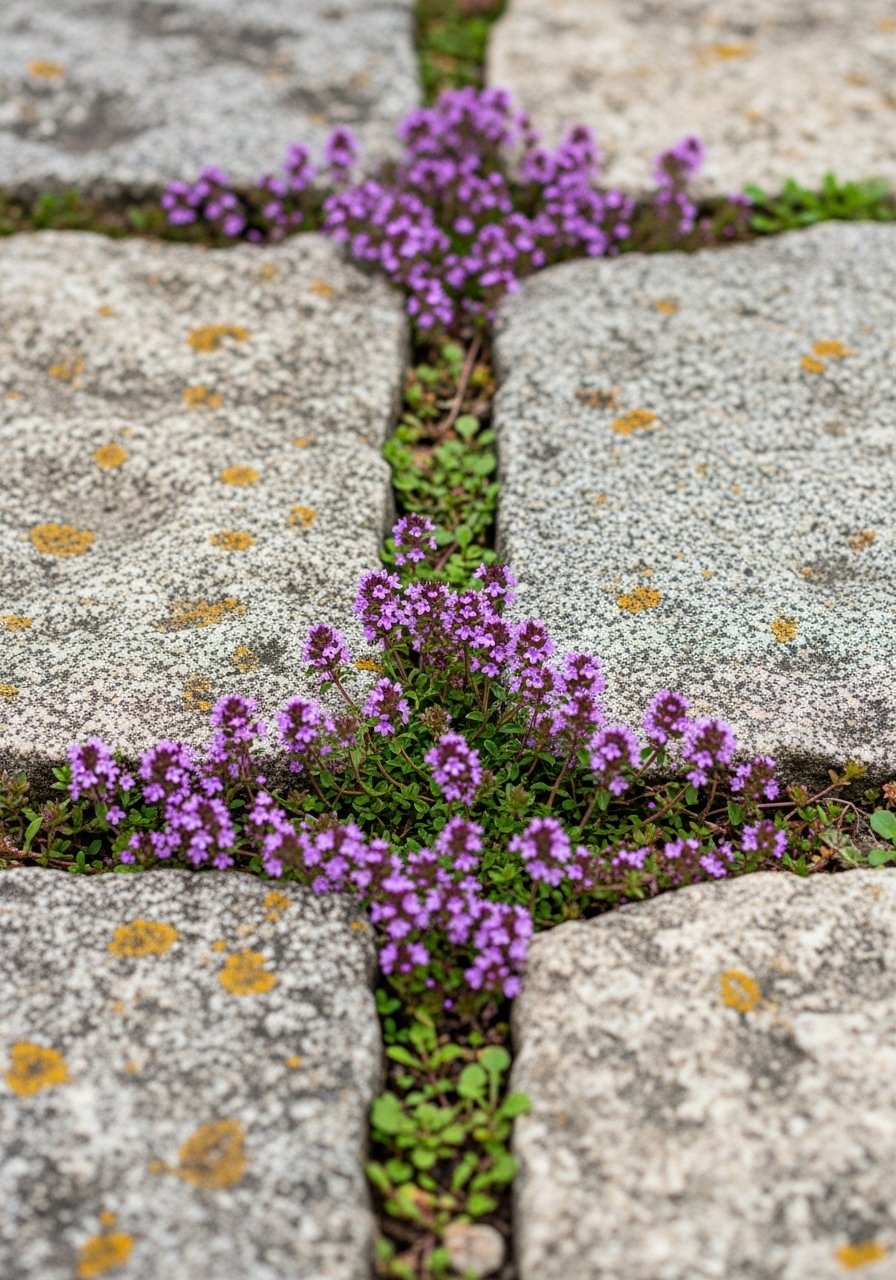
I ripped out moss and jammed creeping thyme between stones. It smells like a kitchen when you step on it. The mat is low and blooms in summer. It took a season to knit together; I overwatered at first and lost seedlings.
Now the thyme softens the stone edges and attracts bees.
Watch drainage—thymes need good dry soil. Plant in sun for best scent.
What You’ll Need for This Look
3. Vinca Minor as a Green Blanket Under Shrubs
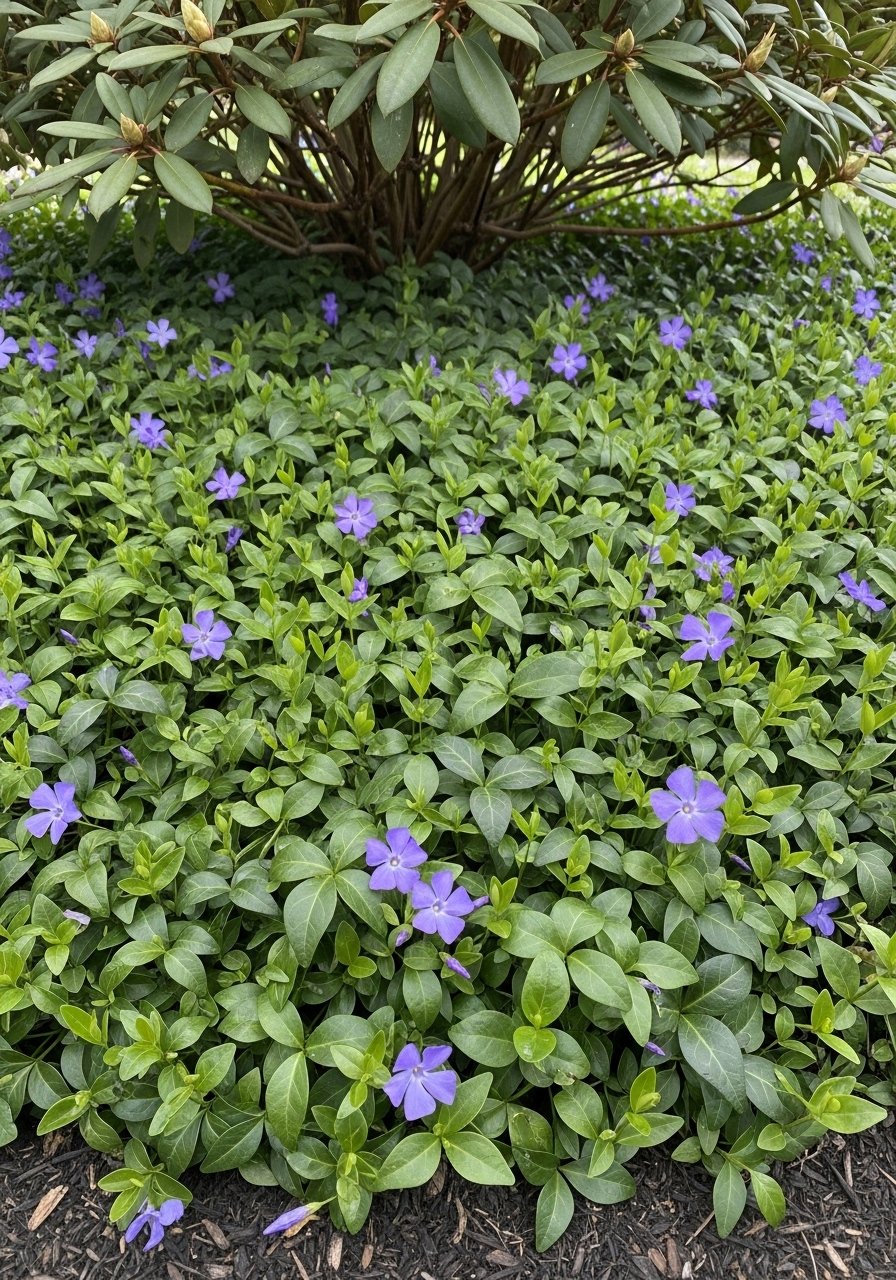
I used Vinca minor under a large rhododendron and it solved two problems: bare soil and weed pressure. It keeps the area tidy year-round and the violet flowers pop in spring. Early on I planted a variegated type that faded; stick with solid green if you want consistent cover.
It handles shade well but can become dominant, so keep an eye on edges.
Tip: plant in groups of 6–8 for instant impact.
What You’ll Need for This Look
4. Pachysandra for a Quiet, Evergreen Ground Layer
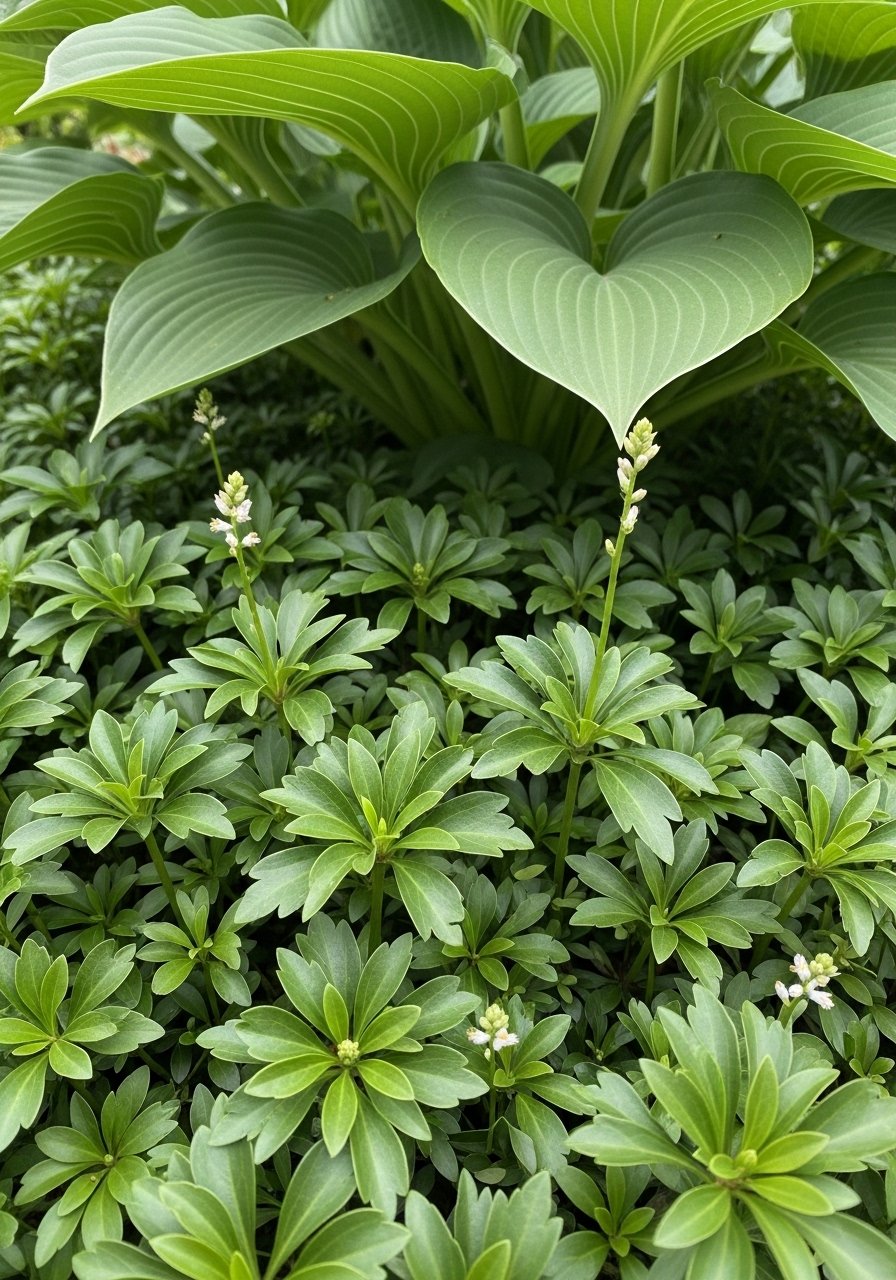
I put pachysandra beneath some older hostas and it made the bed feel finished in every season. It’s ultra-tidy and tolerates deep shade. I misjudged drainage once; standing water gave me fungal spots. Good drainage matters.
It’s slow to establish, but once it does, weeds have nowhere to grow.
Tip: trim a few runners early if it tries to creep into paths.
What You’ll Need for This Look
5. Euonymus Fortunei Mixed with Bulbs for Winter Interest
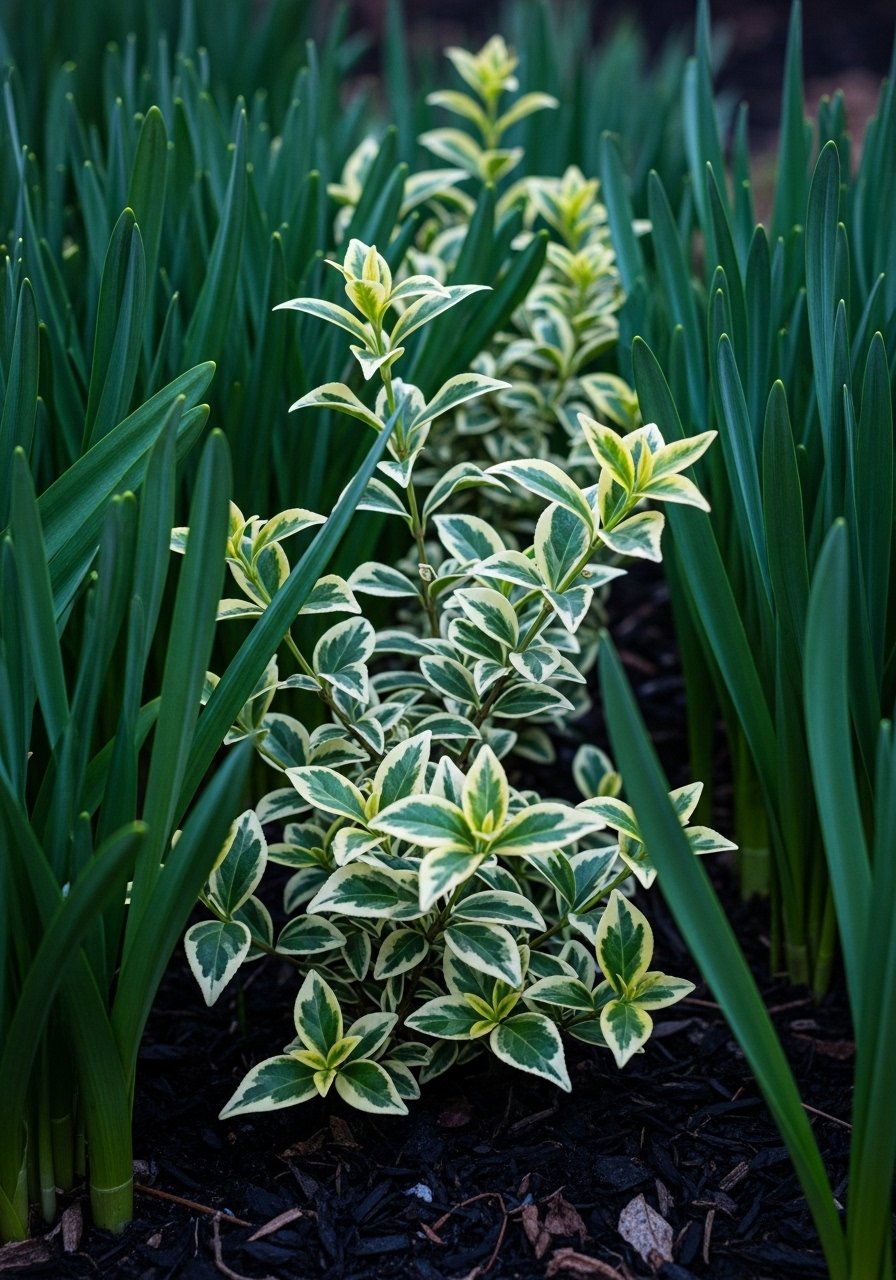
I planted Euonymus fortunei between spring bulbs. The evergreen leaves hide old bulb foliage after flowering and keep the bed lively through winter. I once let a seedling climb a nearby wall—cut it back before it becomes a vine.
It tolerates sun or shade. The variegated forms give brightness in low light.
Tip: keep it trimmed near walkways.
What You’ll Need for This Look
6. Creeping Phlox on a Sunny Rockery
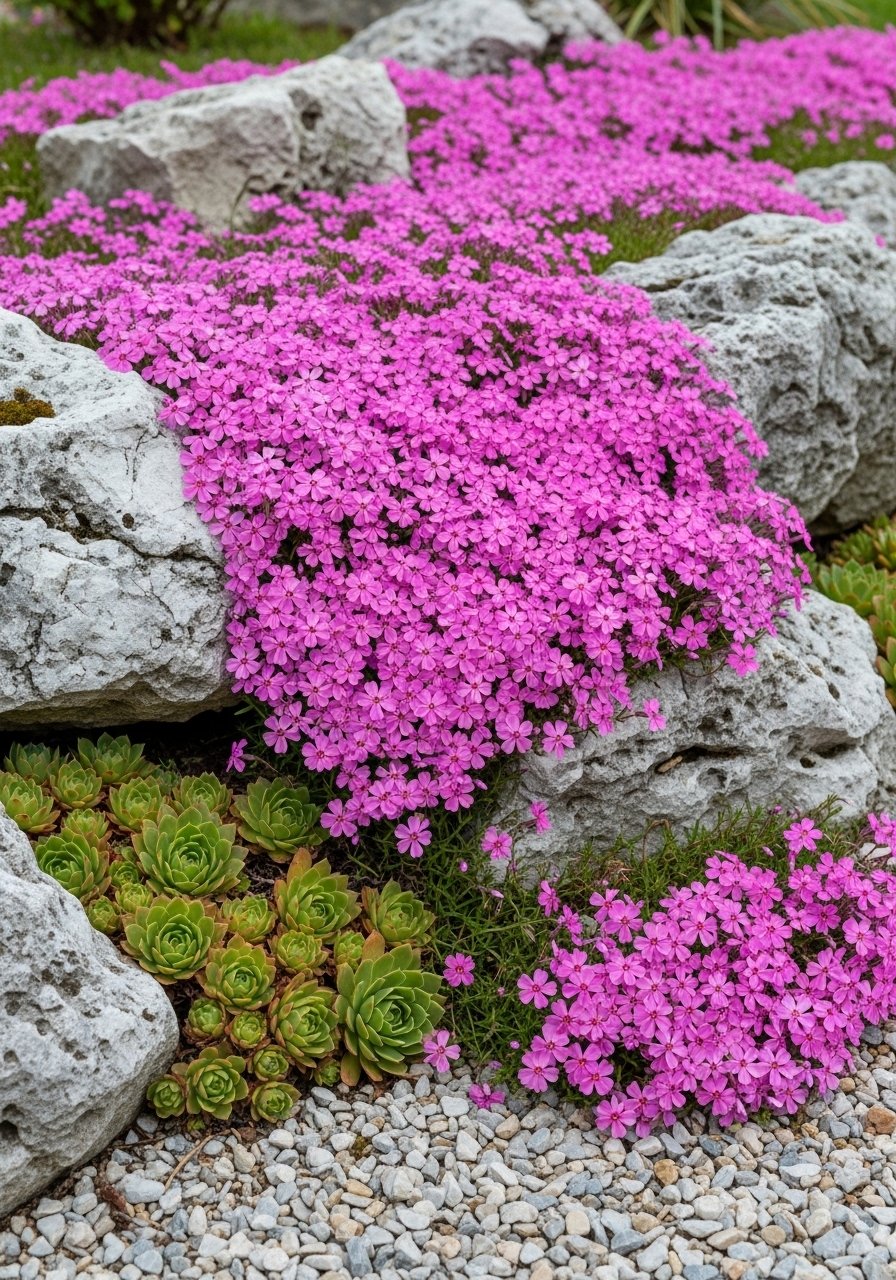
I use creeping phlox on sunny rock borders. It hugs stone and throws a carpet of flowers in spring. It’s semi-evergreen; when cold hits it thins a bit, but comes back strong. My first planting faded in heavy clay—PH matters.
It brightens a rocky slope and masks gaps.
Tip: plant in gritty soil and give good sun.
What You’ll Need for This Look
7. Mondo Grass Lining a Driveway Edge
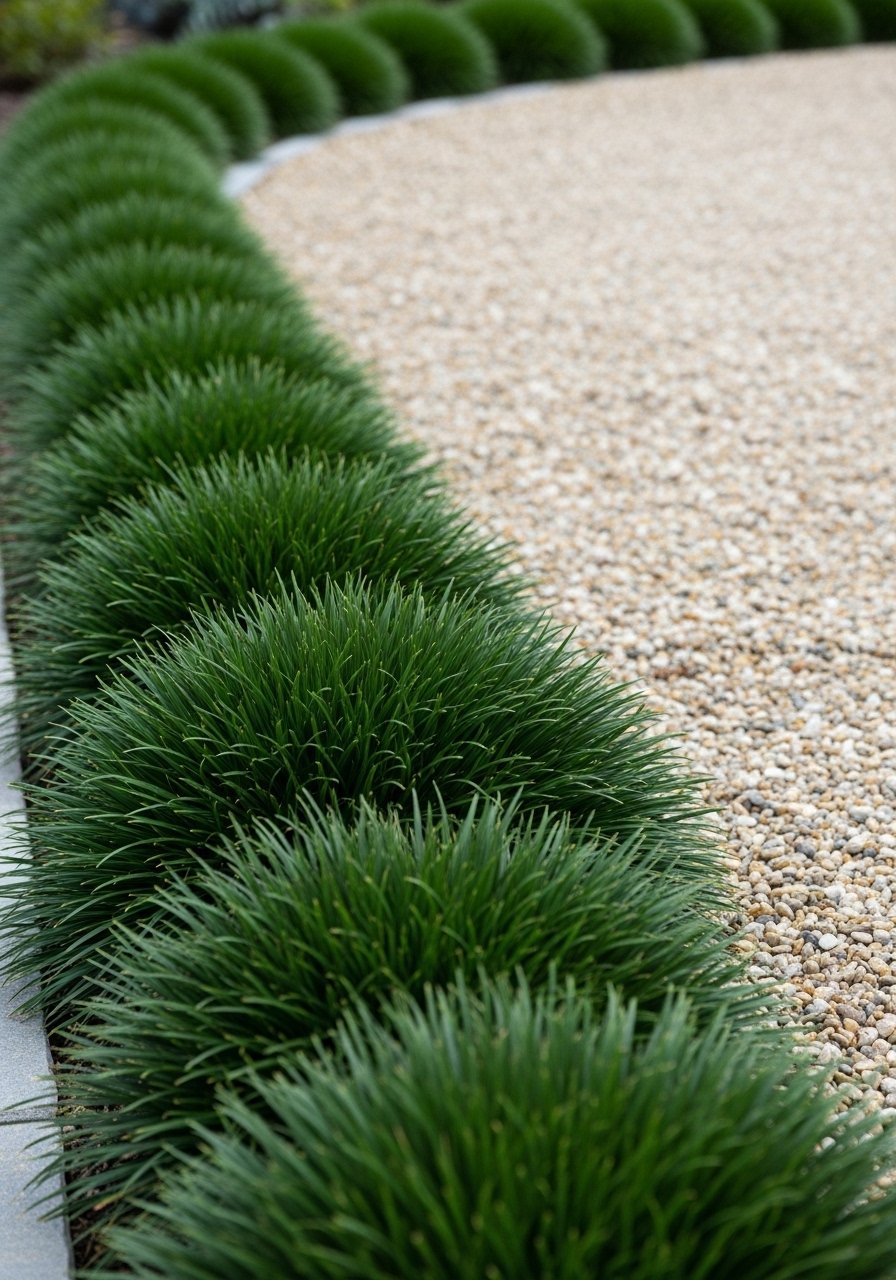
I planted mondo grass along a driveway edge where grass wouldn’t grow. It makes a neat, evergreen line and tolerates some sun. It’s slow but reliable. I planted too densely once and it looked like clumps—space them.
It resists foot traffic and the dark foliage contrasts well with stone.
Tip: stagger planting for a more natural rhythm.
What You’ll Need for This Look
8. Creeping Juniper as a Low-Slung Foundation Cover
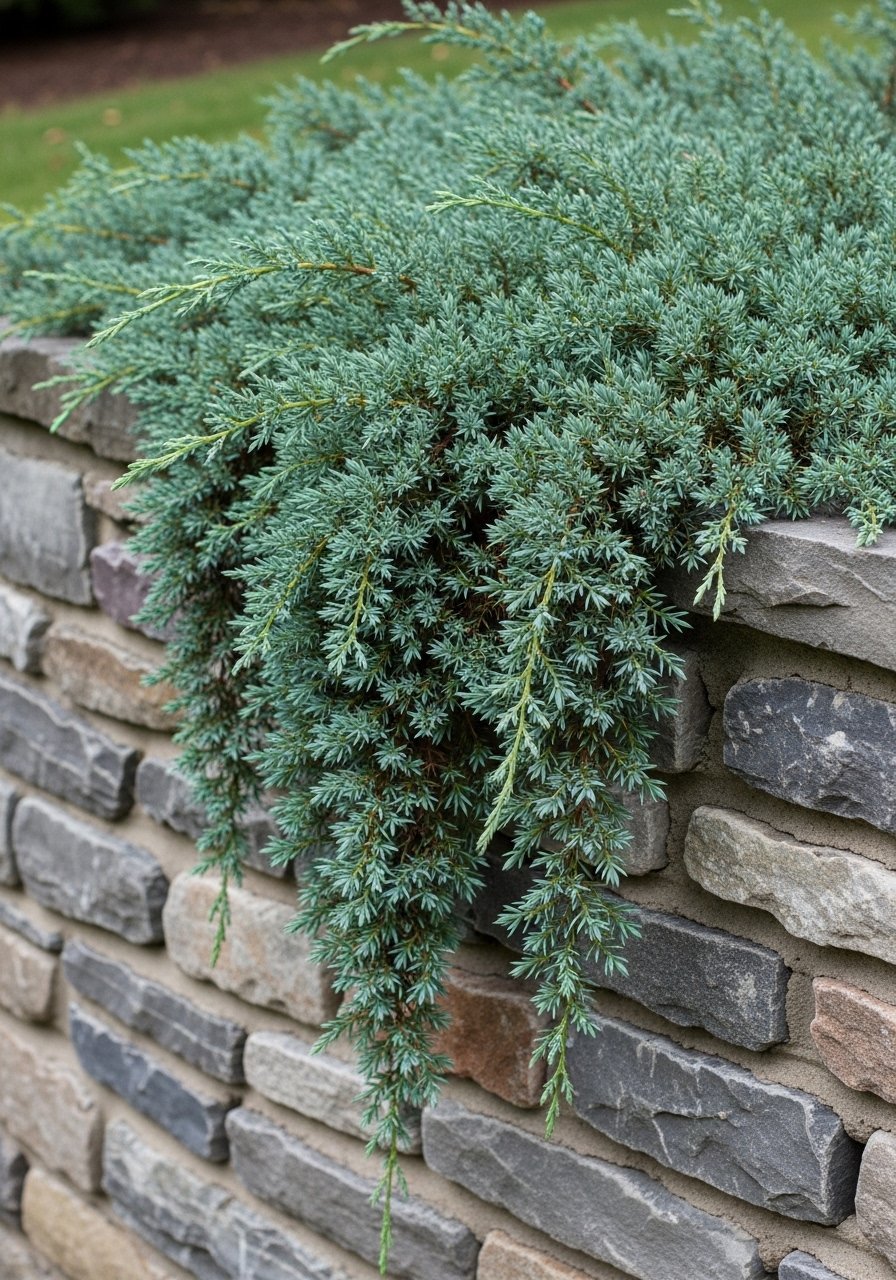
I planted creeping juniper around a stone foundation to soften the base. It stays low and weathers drought years well. The blue tone reads as cool and clean. I learned to avoid heavy mulch against stems; it invites rot.
It takes sun and poor soil, and it’s deer-resistant.
Tip: choose a cultivar that matches your scale—some spread wide.
What You’ll Need for This Look
9. Lamium Under a Shady Tree for Silver Contrast
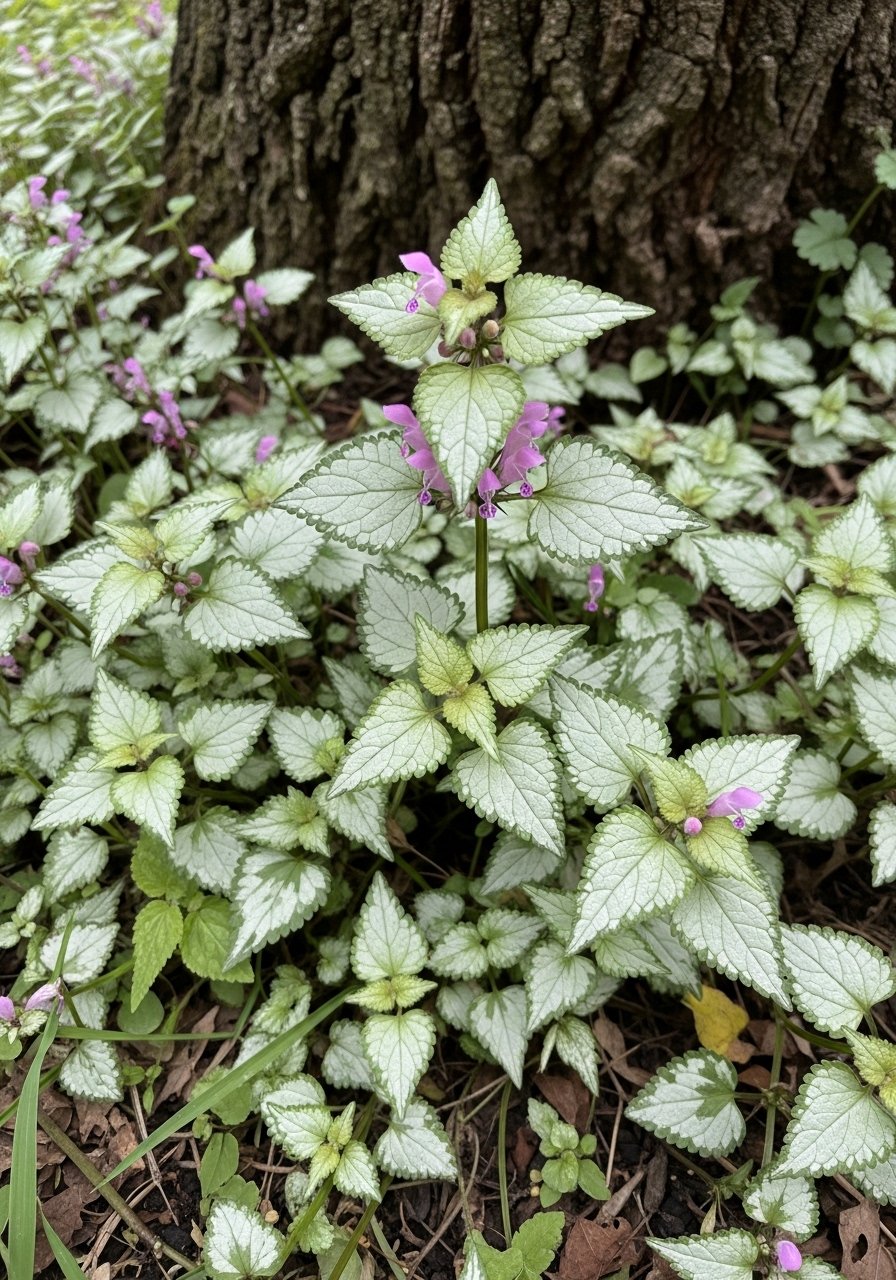
I planted lamium at the base of an older maple and it brightened a bleak spot all winter. The variegated leaves catch low light and the flowers are a pleasant surprise. I made the mistake of placing it where dogs dig; it didn’t appreciate the trampling.
It’s ideal for shady borders that need contrast.
Tip: keep an eye for aggressive spread in rich soil.
What You’ll Need for This Look
10. Sedum Dragon’s Blood for Sunny, Low-Care Patches
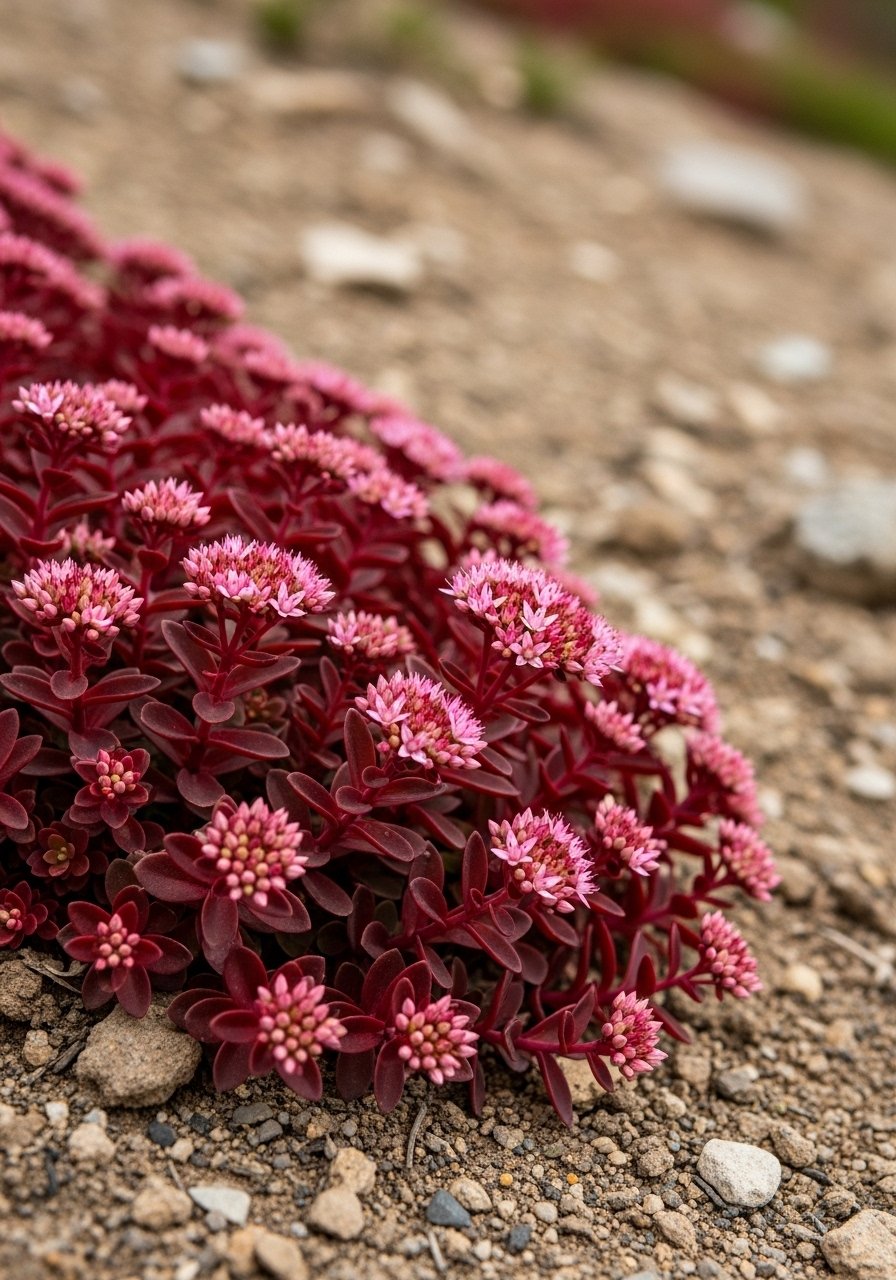
I use Sedum spurium on hot, sunny banks where nothing else thrived. The foliage holds color through seasons and it fills gaps quickly. I once planted it too deep and it rotted; keep crowns just at soil level.
It’s drought-tolerant and needs little fuss once established.
Tip: pair with native grasses for contrast.
What You’ll Need for This Look
11. Geranium macrorrhizum for Aromatic Evergreen Groundcover
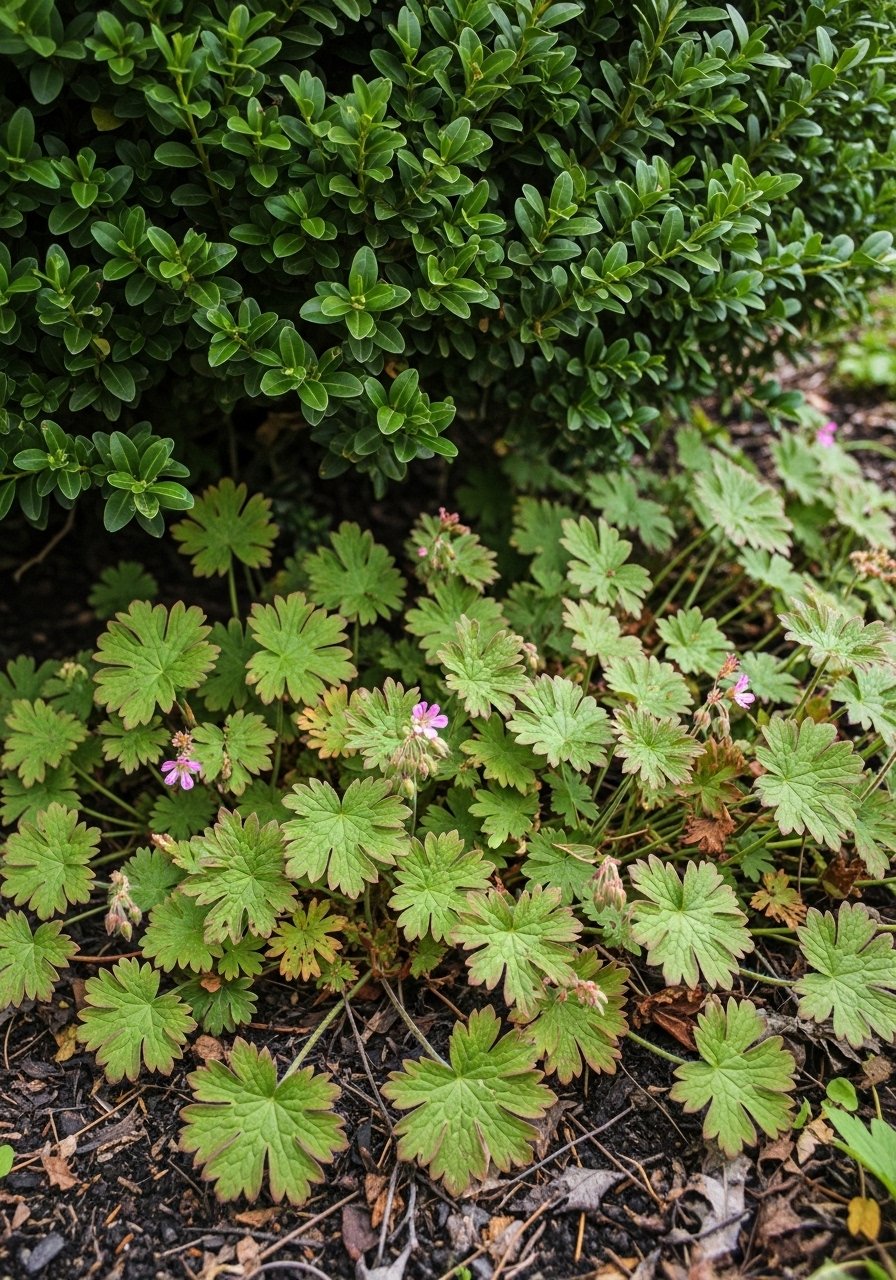
I planted Geranium macrorrhizum near a door where its crushed leaves release a piney scent. It’s evergreen and covers slopes neatly. Early on I underplanted and it didn’t hide bare soil fast enough—use denser spacing.
It’s tough and tolerates dry shade.
Tip: deadhead sparingly; the foliage is the main show.
What You’ll Need for This Look
12. Prostrate Rosemary Along a Kitchen Garden Edge
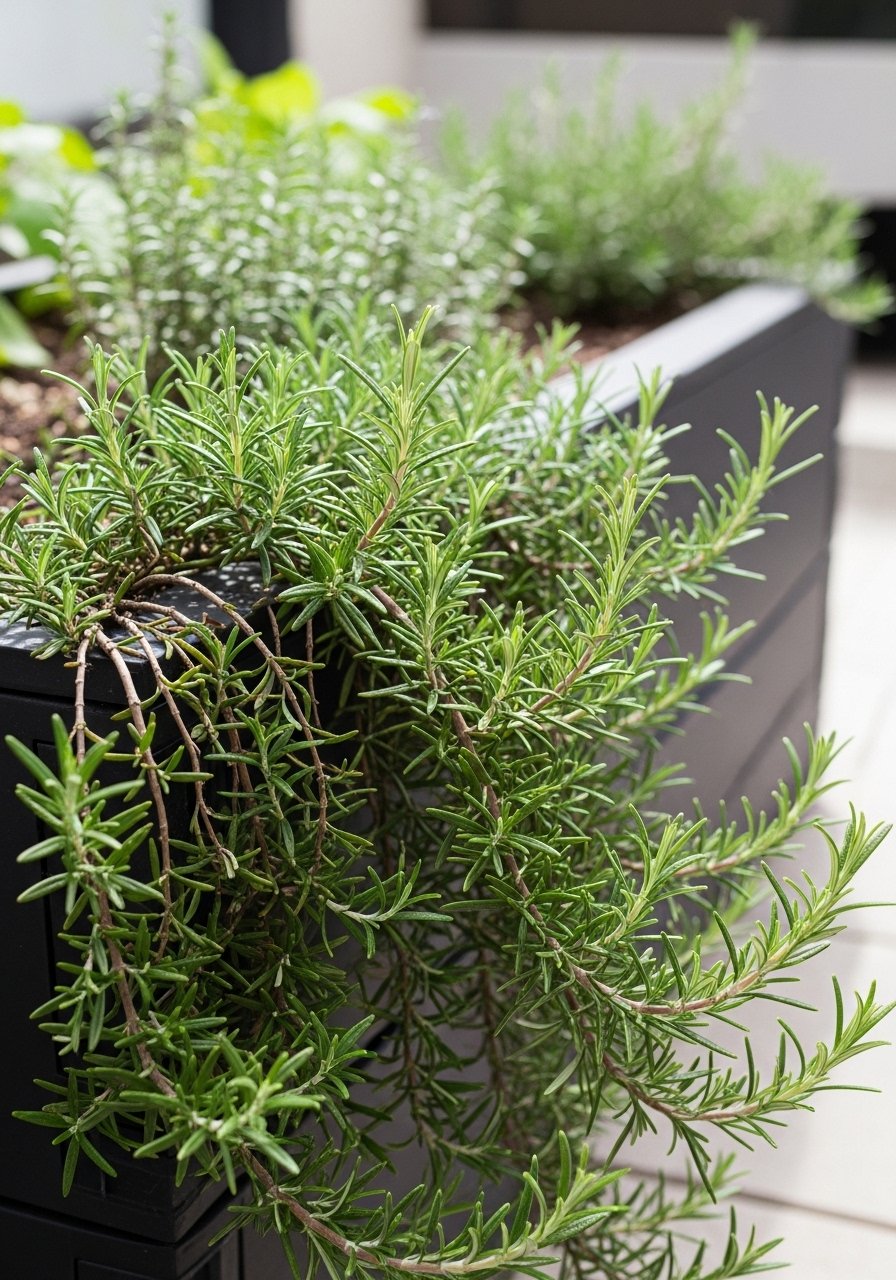
I let prostrate rosemary tumble over a raised kitchen bed. It smells good and gives evergreen structure. I trimmed it to keep access to the bed; left wild it becomes woody and sparse in the center.
It’s drought-tolerant and hardy in mild winters.
Tip: plant where you can cut sprigs for cooking.
What You’ll Need for This Look
13. Evergreen Oregano on a Sunny Wall Base
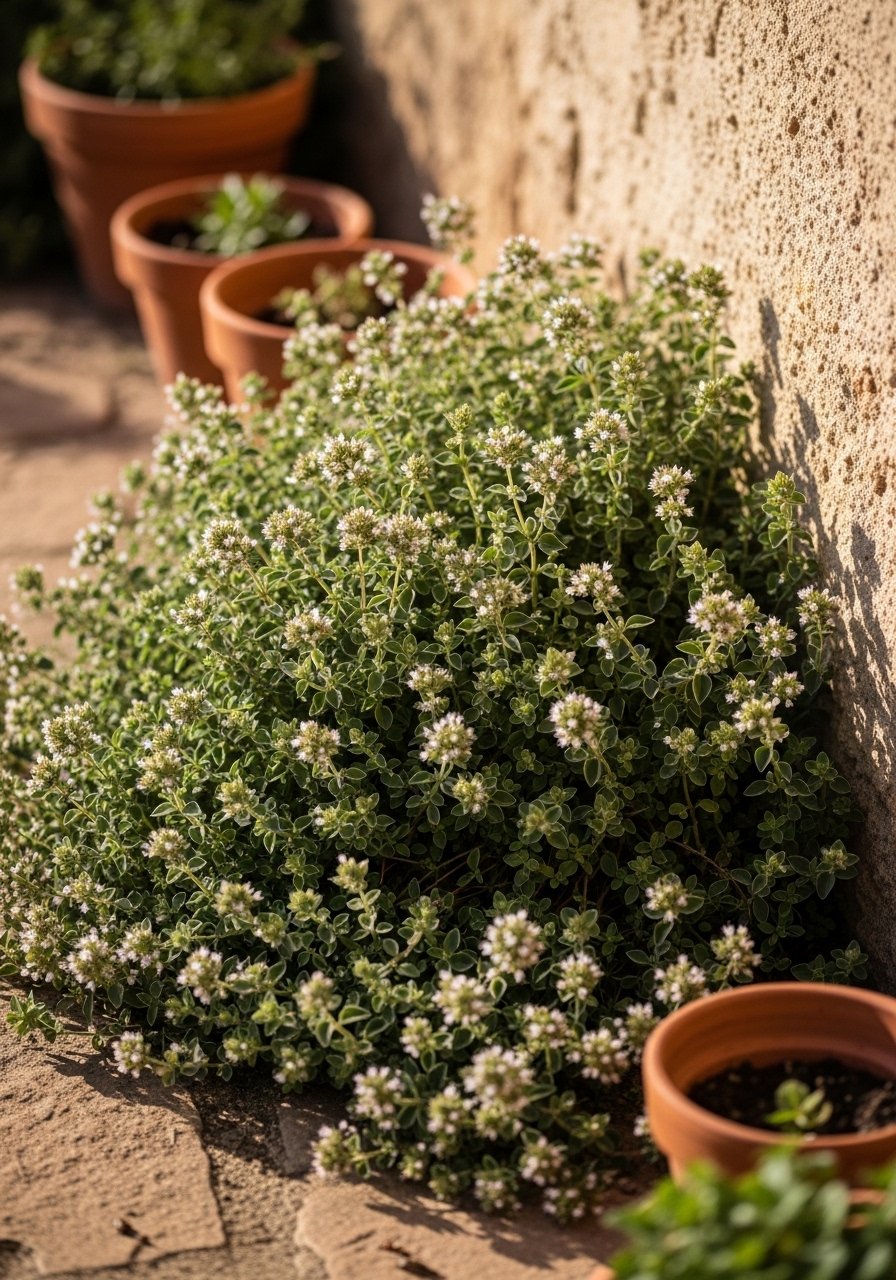
I planted evergreen oregano along a south-facing wall. It fills low gaps and releases scent. It’s less showy than thyme but tougher in poor soil. My first patch got overrun by grass edges—give a clear border.
It’s a friendly plant for informal, lived-in beds.
Tip: leave a few flower heads for pollinators.
What You’ll Need for This Look
14. Prostrate Cotoneaster Under Low Windows
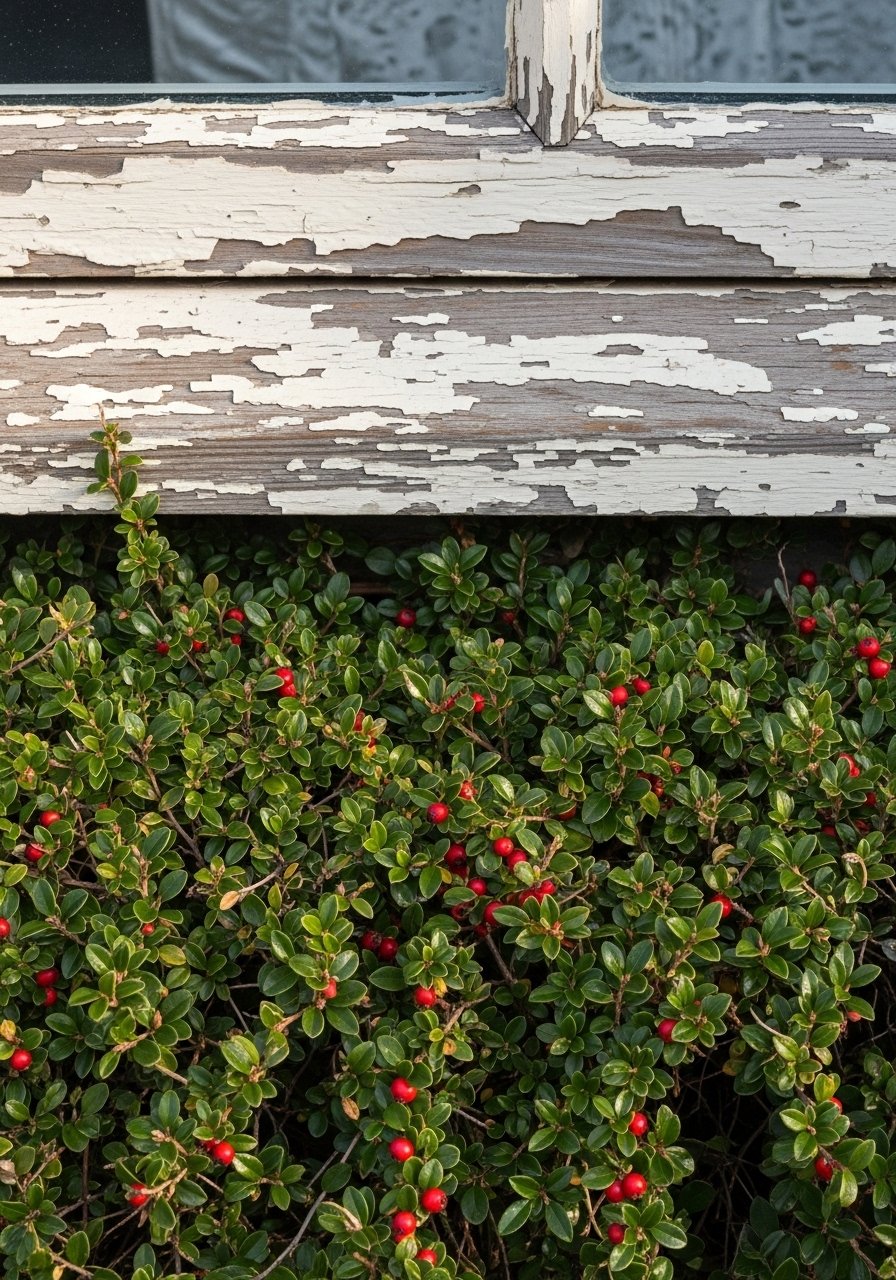
I used prostrate cotoneaster beneath low windows to keep winter interest with berries. The glossy leaves are neat and the red berries draw birds. I once trimmed it too late and removed winter berries—prune in spring.
It tolerates sun and poor soils and fills wide spaces.
Tip: avoid planting too close to foundations—leave a small gap.
What You’ll Need for This Look
15. Erica Carnea (Winter Heath) for Early Season Color
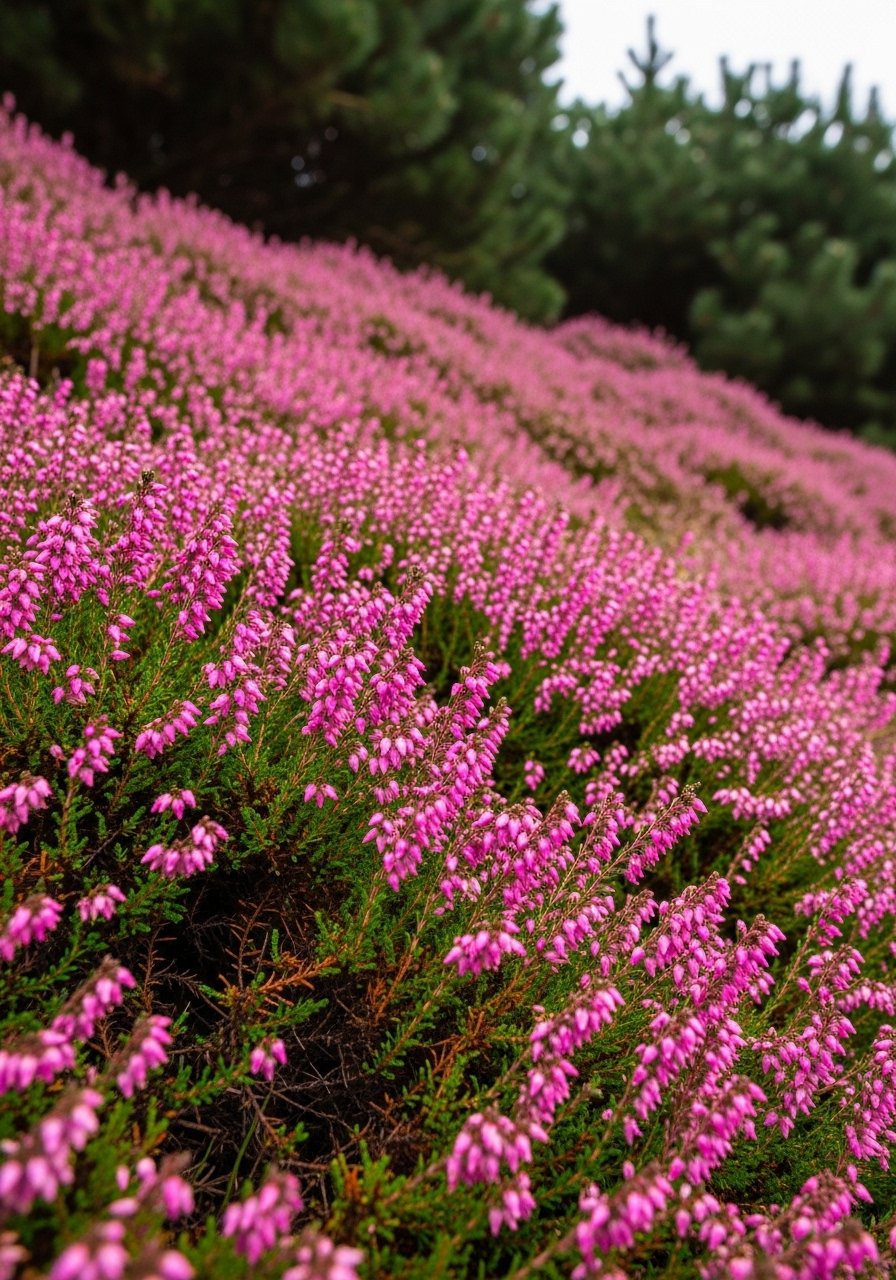
I planted winter heath on a slope where bulbs were slow. It blooms in late winter and holds tidy foliage. I learned it prefers acidic soil; my first bed faded. It’s forgiving once soil is right.
It lights up an otherwise brown winter bed.
Tip: pair with heathers and leave space for airflow.
What You’ll Need for This Look
16. Gaultheria procumbens (Wintergreen) in a Woodland Nook
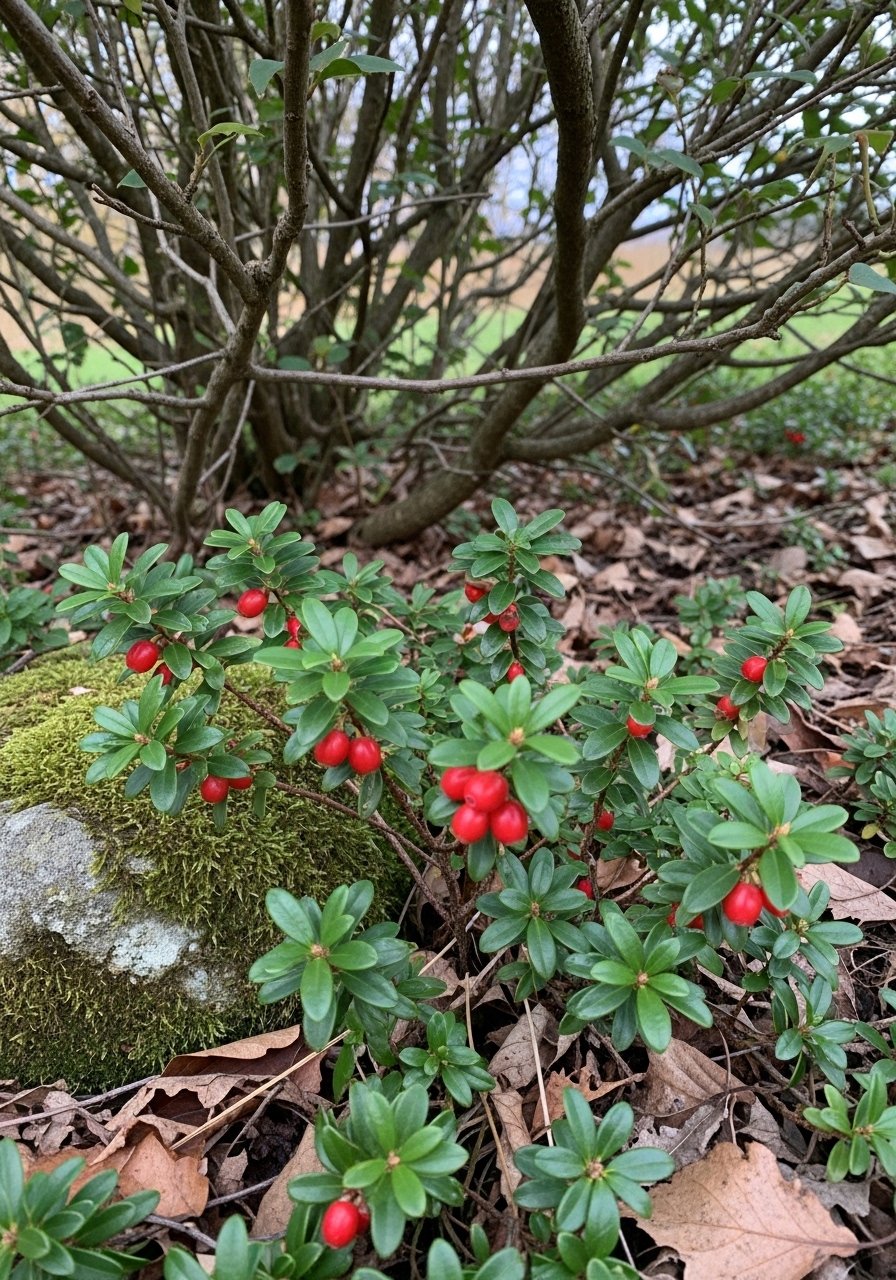
I tucked wintergreen into a damp, shady nook and it stayed glossy all year. The berries are small but noticeable. I once expected a large spread—this plant stays modest. Use it where you want low, tidy evergreen texture.
It prefers acid, humus-rich soil.
Tip: mulch yearly with leaf compost.
What You’ll Need for This Look
17. Sempervivum and Sedum Mix on a Hot Wall
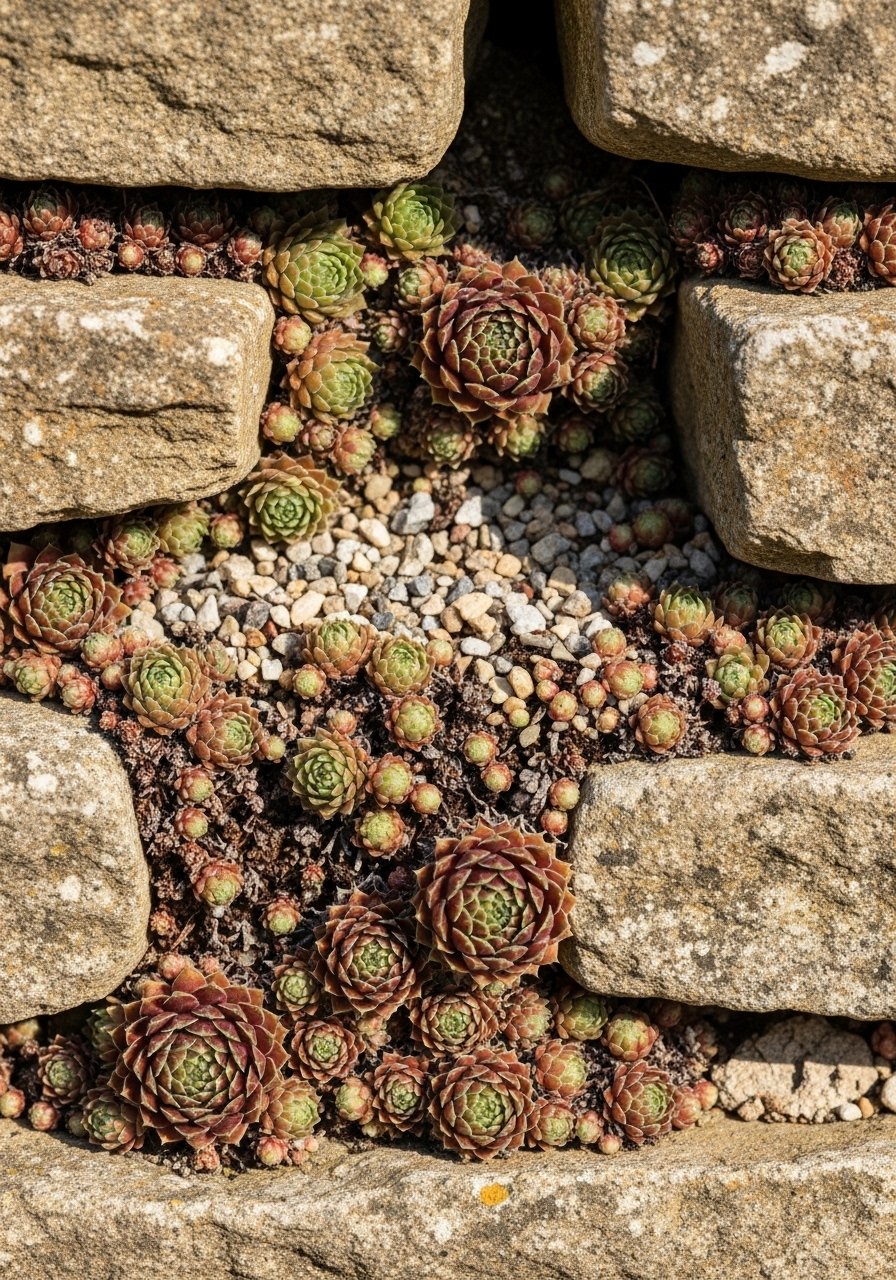
I pack sempervivums and low sedums into wall crevices. They survive thin soil and sun, and they stay evergreen as tight rosettes. I made the mistake of planting too deep once—these like exposed crowns.
They give architectural form and harsh-site resilience.
Tip: water sparingly the first year to avoid rot.
What You’ll Need for This Look
18. Sarcococca for a Fragrant, Shaded Walk Edge
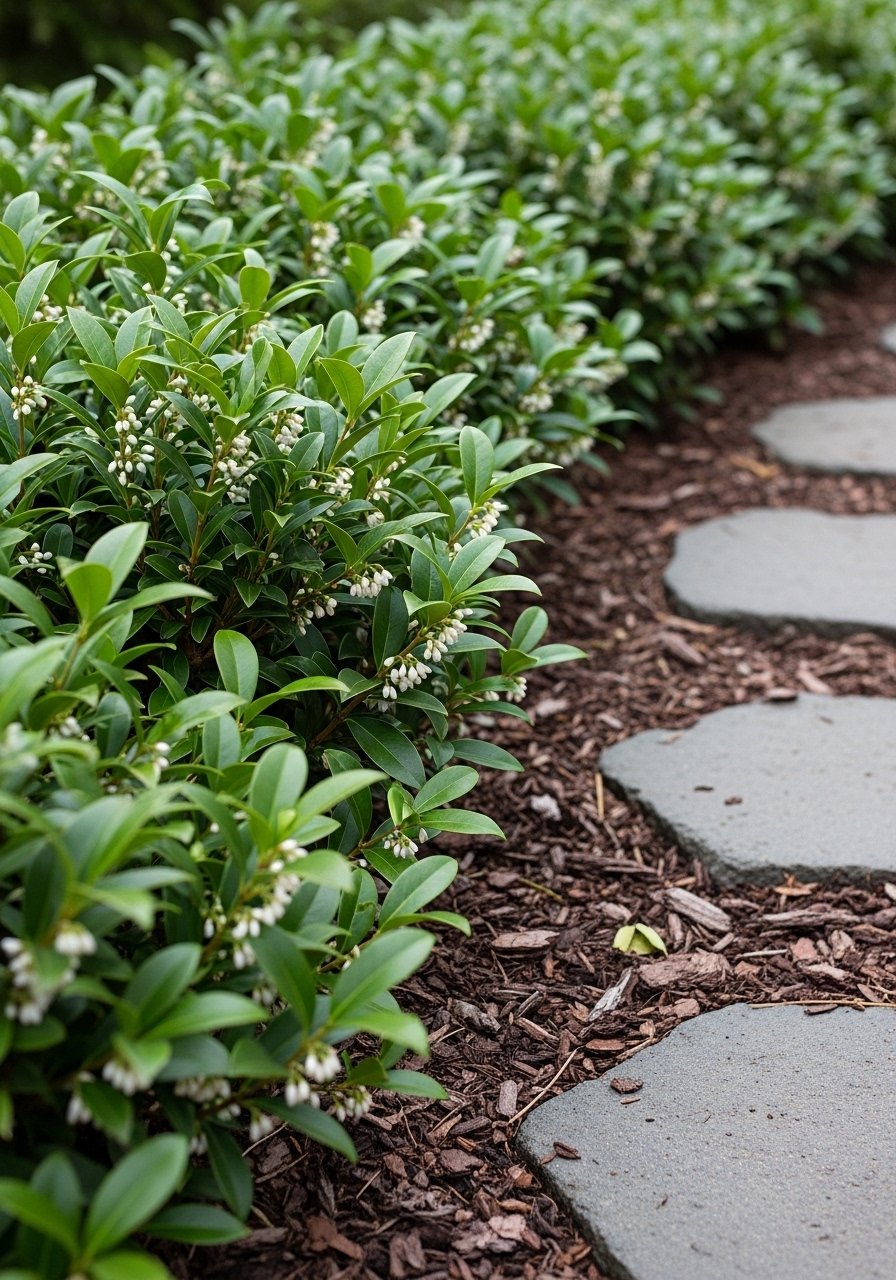
I planted sweet box along a shaded walk for winter scent. When it blooms, the narrow, fragrant flowers are a quiet surprise. It grows as a low mat in deep shade. I once planted it too close to a fence and it became crowded—leave space to breathe.
It’s evergreen and neat most of the year.
Tip: plant in groups to get more fragrance impact.
What You’ll Need for This Look
19. Hellebores as Evergreen Fill Between Perennials
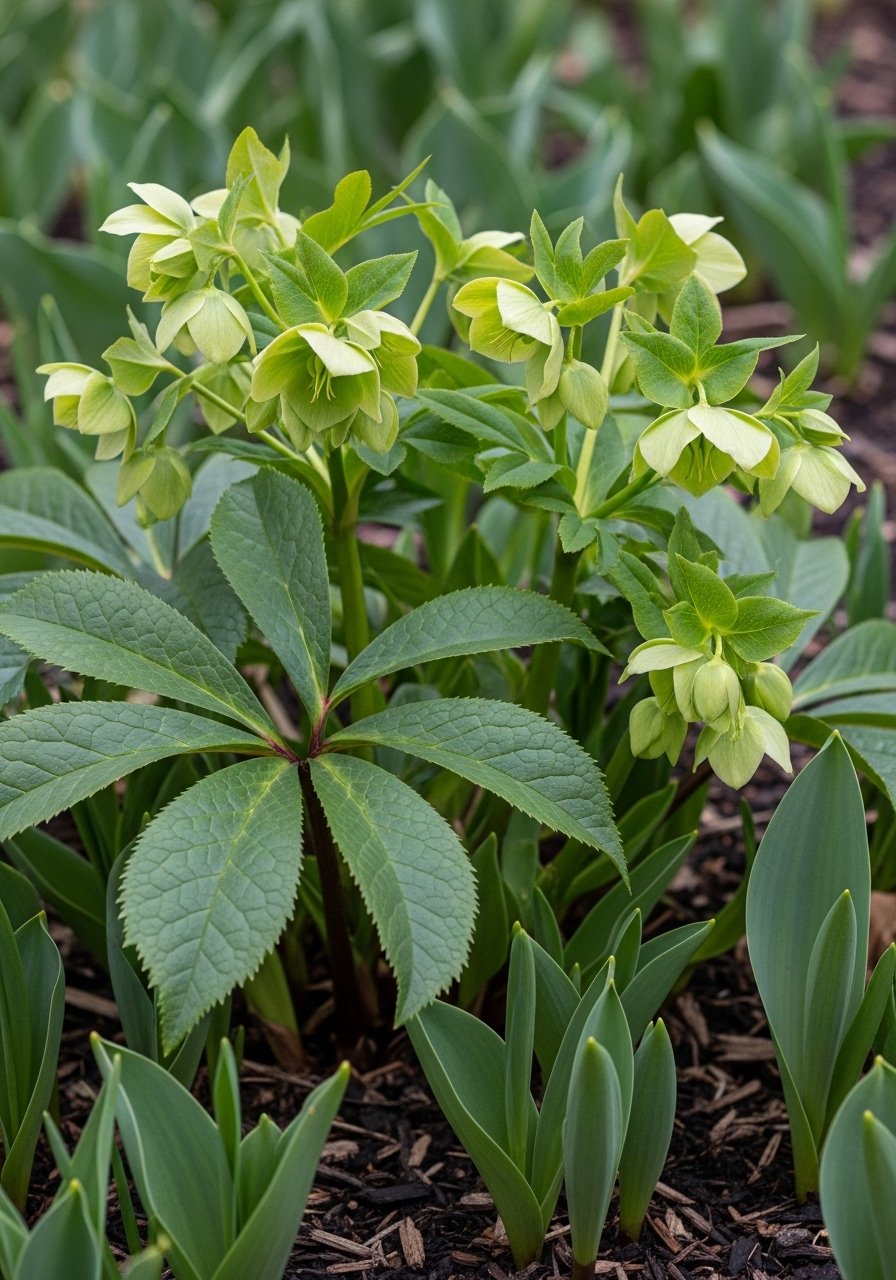
I use evergreen hellebores to fill mid-border gaps. Their leathery leaves anchor the bed in winter and early flowers are subtle and long-lasting. I once left leaves to flop—light pruning tidies them up.
They tolerate shade and prefer humus-rich soil.
Tip: plant slightly raised if soil is heavy.
What You’ll Need for This Look
20. Euphorbia Myrsinites for Soft, Blue-Green Groundcover
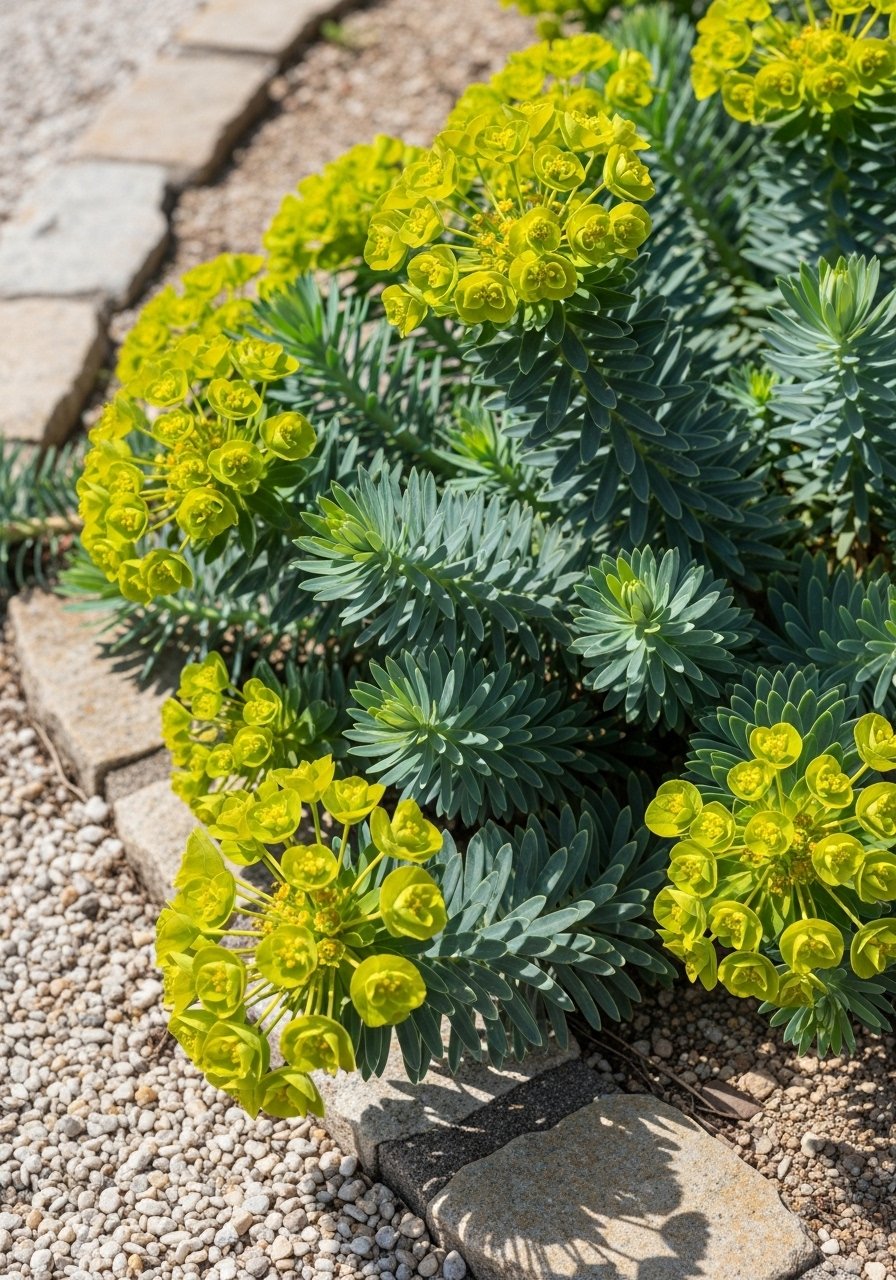
I planted Euphorbia myrsinites on a hot bank for texture contrast. The blue-green trailing leaves sit low and the chartreuse flowers add late spring interest. I learned to wear gloves—sap can irritate skin.
It tolerates drought and poor soil, and it self-seeds cautiously.
Tip: situate where its color complements stone or wood.
What You’ll Need for This Look
21. Veronica (Hebe) Ground Cover Near a Patio
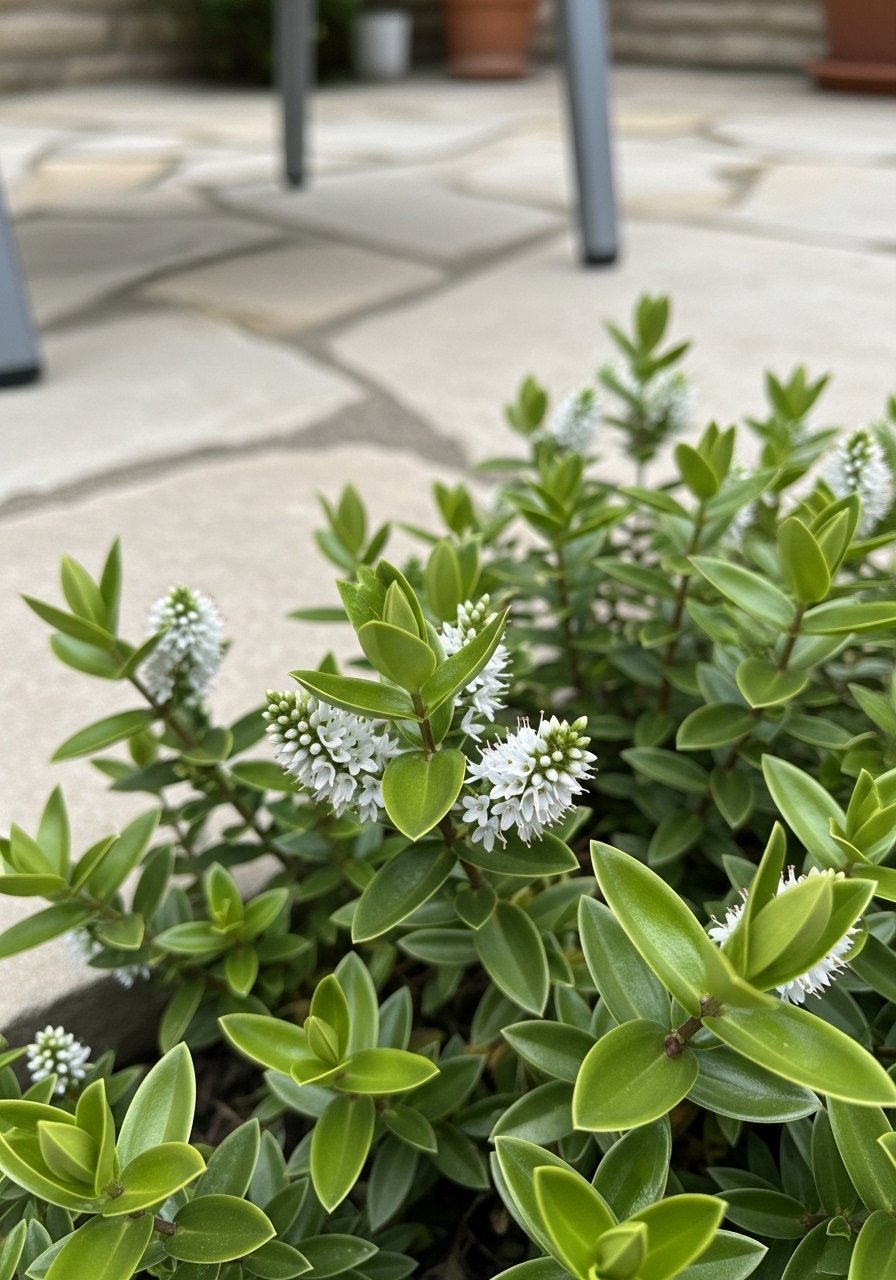
I planted low hebes along a patio edge where I wanted evergreen structure without blocking views. They look tidy and hold color through winter. My first choice was too tall—choose prostrate varieties for true groundcover.
They handle coastal conditions well.
Tip: shelter from harsh winter winds on exposed sites.
What You’ll Need for This Look
22. Ophiopogon and Liriope Mix for Edging Beds
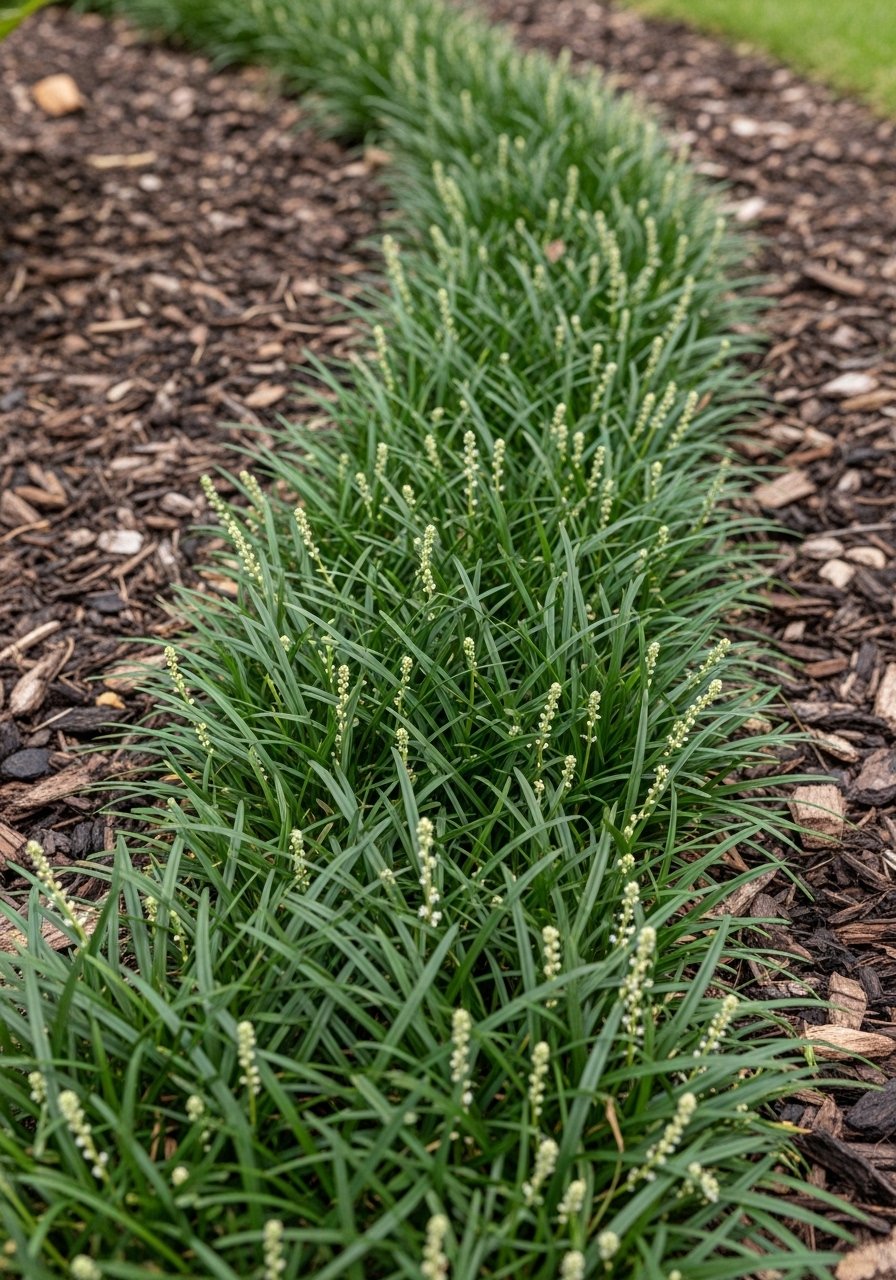
I alternate mondo grass and dwarf liriope along long borders. The different textures create rhythm and stay evergreen. Liriope can be more aggressive; I once let it form a hedge—cut it back to keep it low.
This mix handles partial shade and tidy edges well.
Tip: stagger heights for a layered look.
What You’ll Need for This Look
23. Vinca Major for Large, Sunny Areas That Need Green
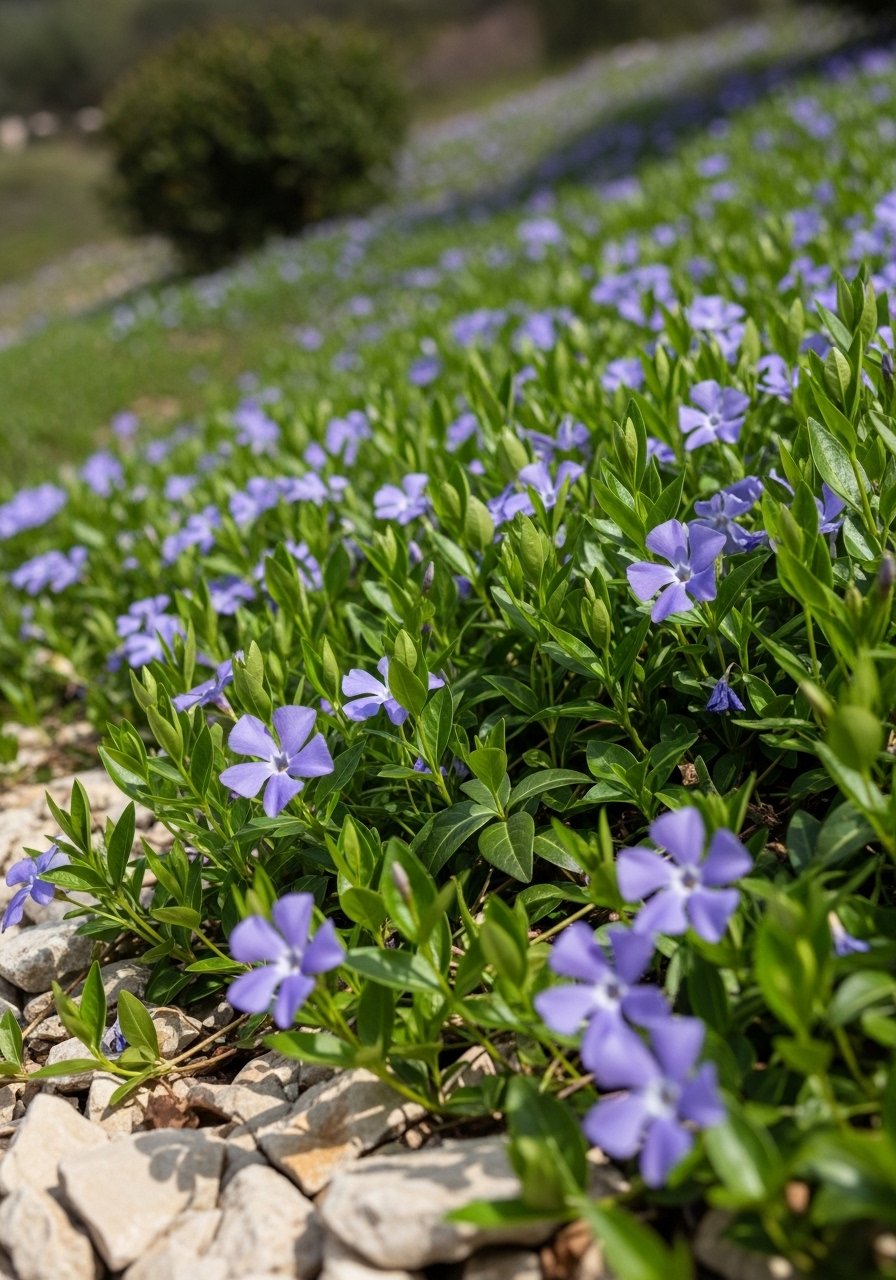
I chose Vinca major for a large, sunny slope where I wanted quick evergreen cover. It spreads fast and fills gaps. I mistakenly planted it by natives and had to control runners—containment matters.
It’s a workhorse in sunny sites.
Tip: use root barriers where you want to limit spread.
What You’ll Need for This Look
24. Prostrate Euonymus for Modern, Clean Lines
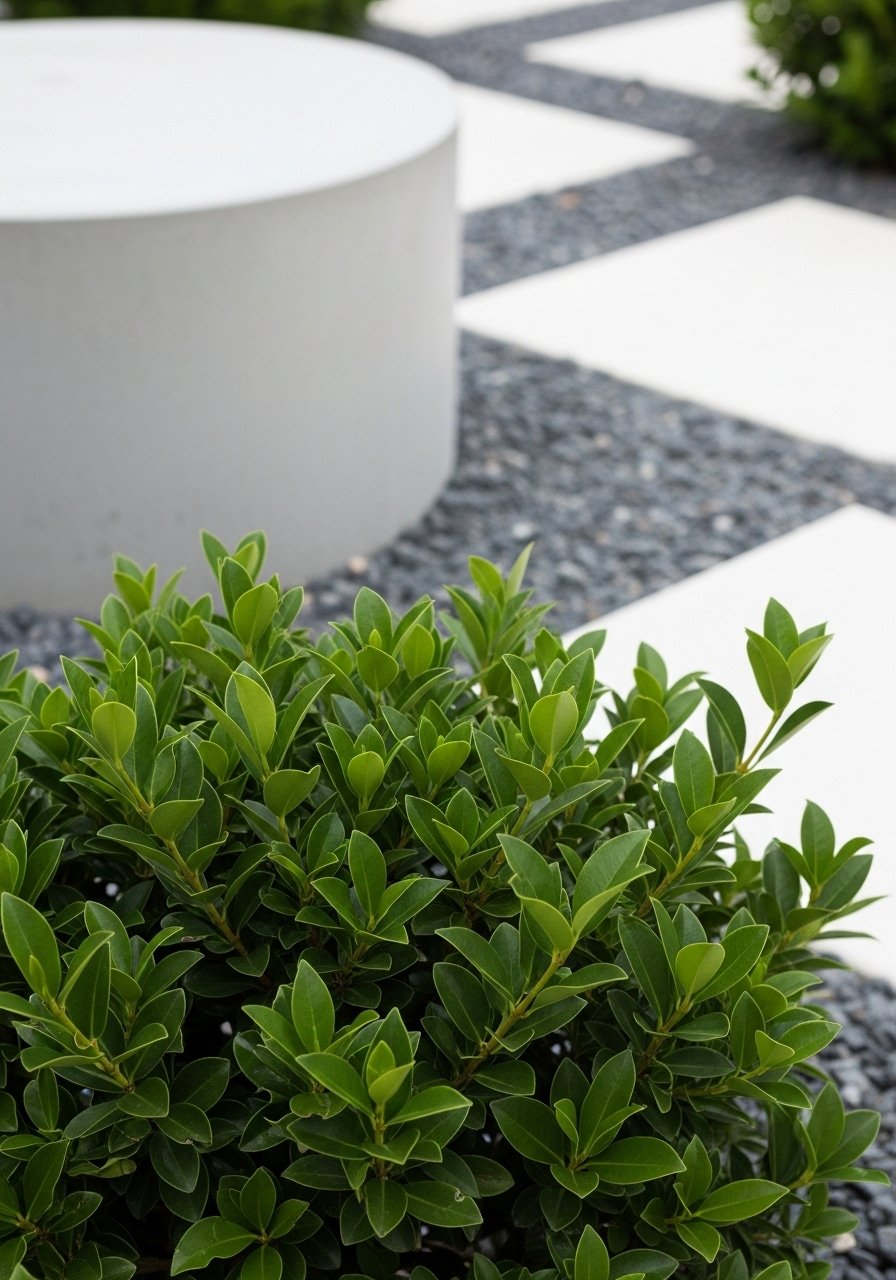
I used a prostrate euonymus near a modern concrete planter to keep lines crisp. The evergreen foliage reads clean and simple. I found variegated varieties can fade in strong sun—match variety to exposure.
It’s tidy and pairs well with architectural elements.
Tip: trim lightly in spring for shape.
What You’ll Need for This Look
25. Prostrate Cotoneaster and Low Lights for Evening Appeal
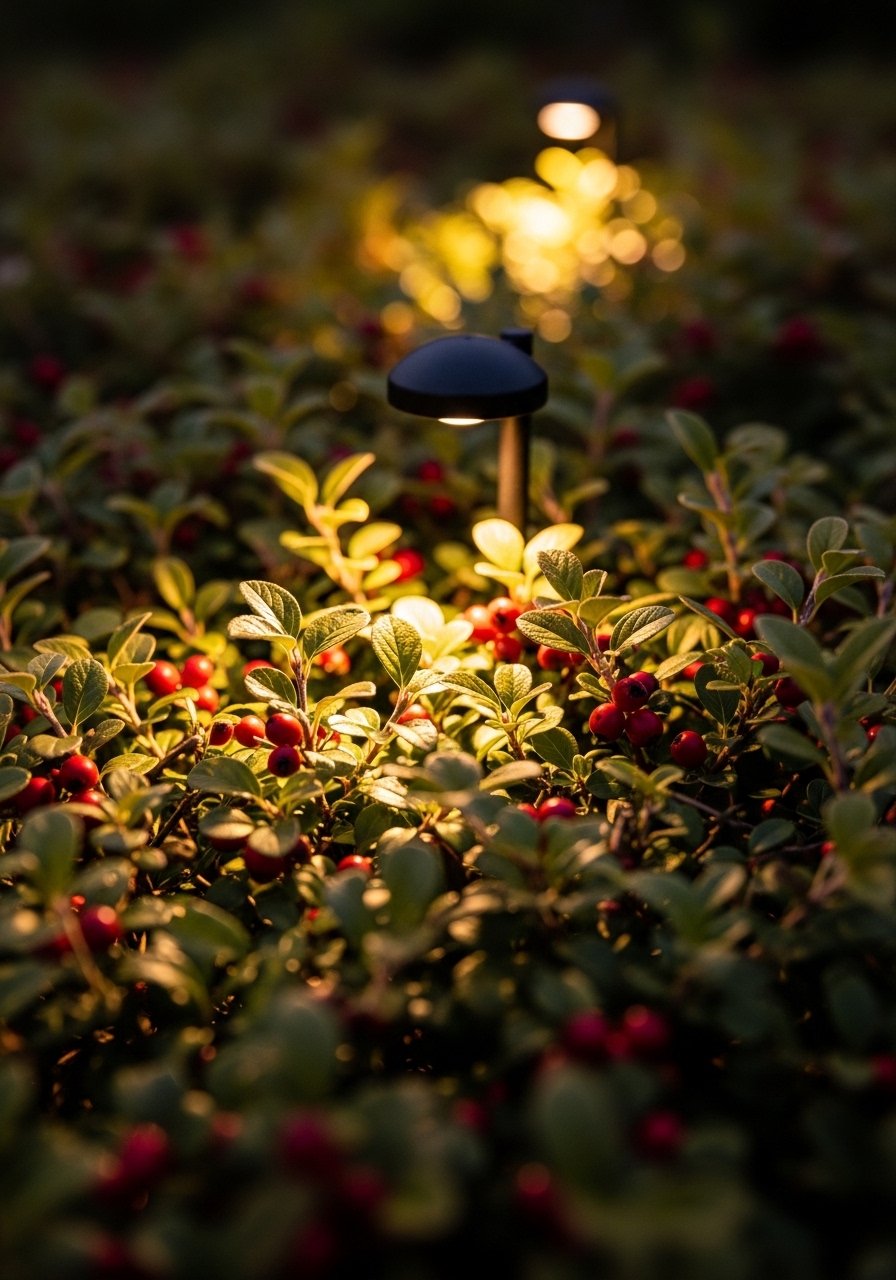
I combined low cotoneaster with subtle path lights for winter evening interest. The berries pick up the warm glow and the groundcover stays neat. I once used bright lights and lost the subtlety—low, warm fixtures work best.
It keeps a border readable after dark.
Tip: place lights low and aim for warm tones.
What You’ll Need for This Look
26. Groundcover Ivy for Vertical-to-Horizontal Transitions
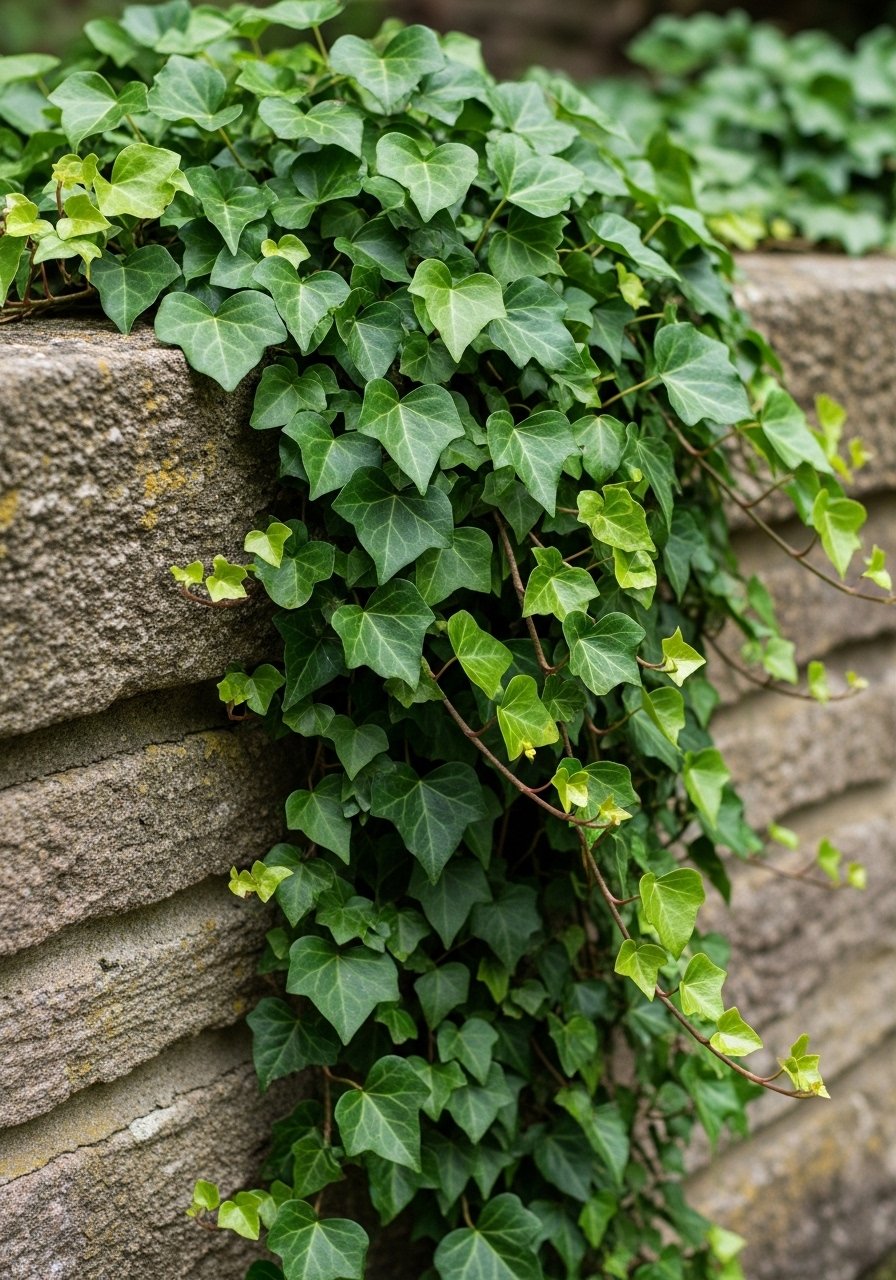
I let ivy spill down a low wall and across the ground to create a green transition. It’s evergreen and fast. I learned the hard way to trim near structures—ivy can climb unexpectedly and damage surfaces.
Use it where speed and coverage are priorities.
Tip: keep it off wooden structures.
What You’ll Need for This Look
27. Cotinus (Smoke Bush) Small Groundcover Underplanting with Evergreen Herbs
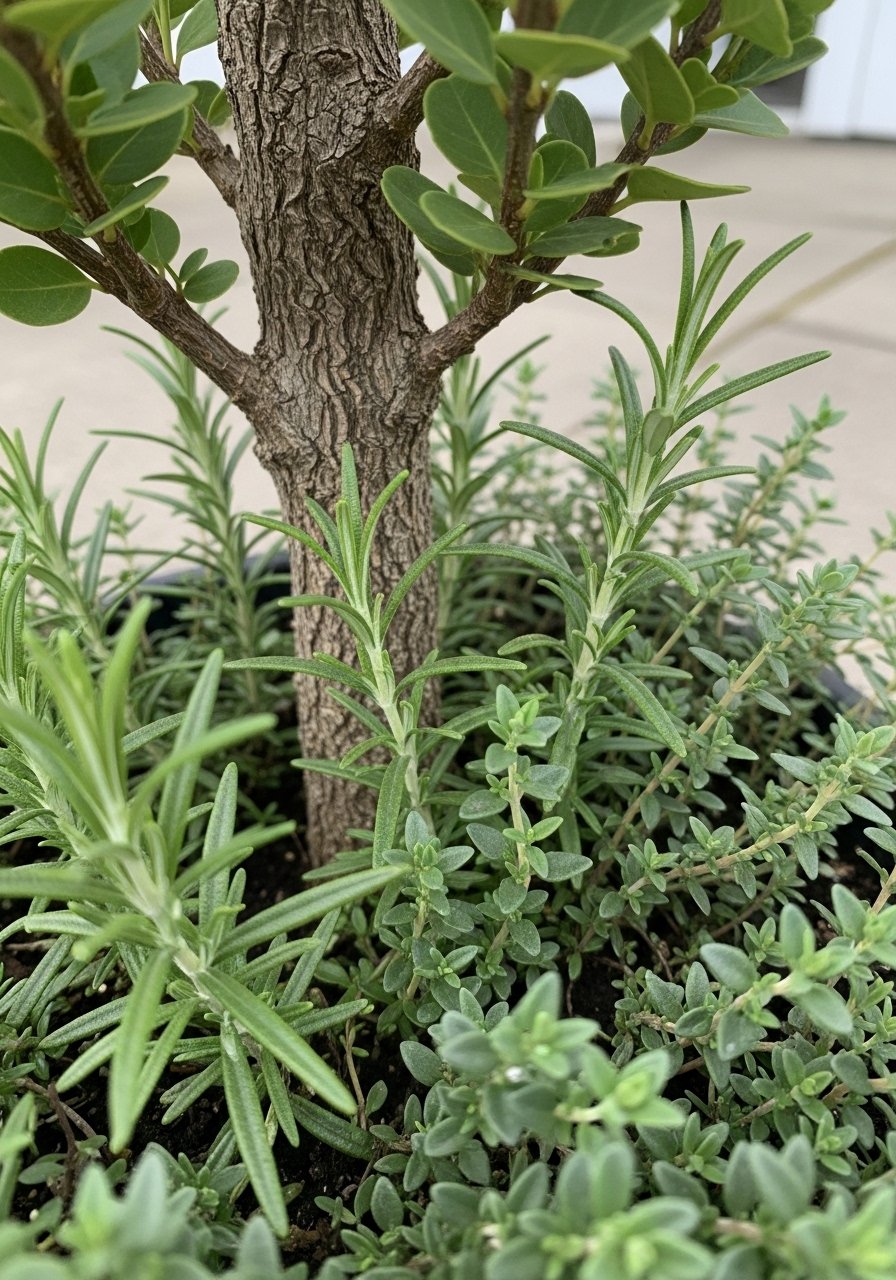
I underplanted a small smoke bush with a mix of evergreen herbs to keep the base lively year-round. The herbs knit a low evergreen carpet and give scent and texture. I planted thyme too close to the trunk once—it competed. Space them from woody stems.
This mix creates edible interest and steady form.
Tip: leave room for the shrub’s roots.
What You’ll Need for This Look
28. Low Heather and Rock Mulch for Coastal, Windy Sites
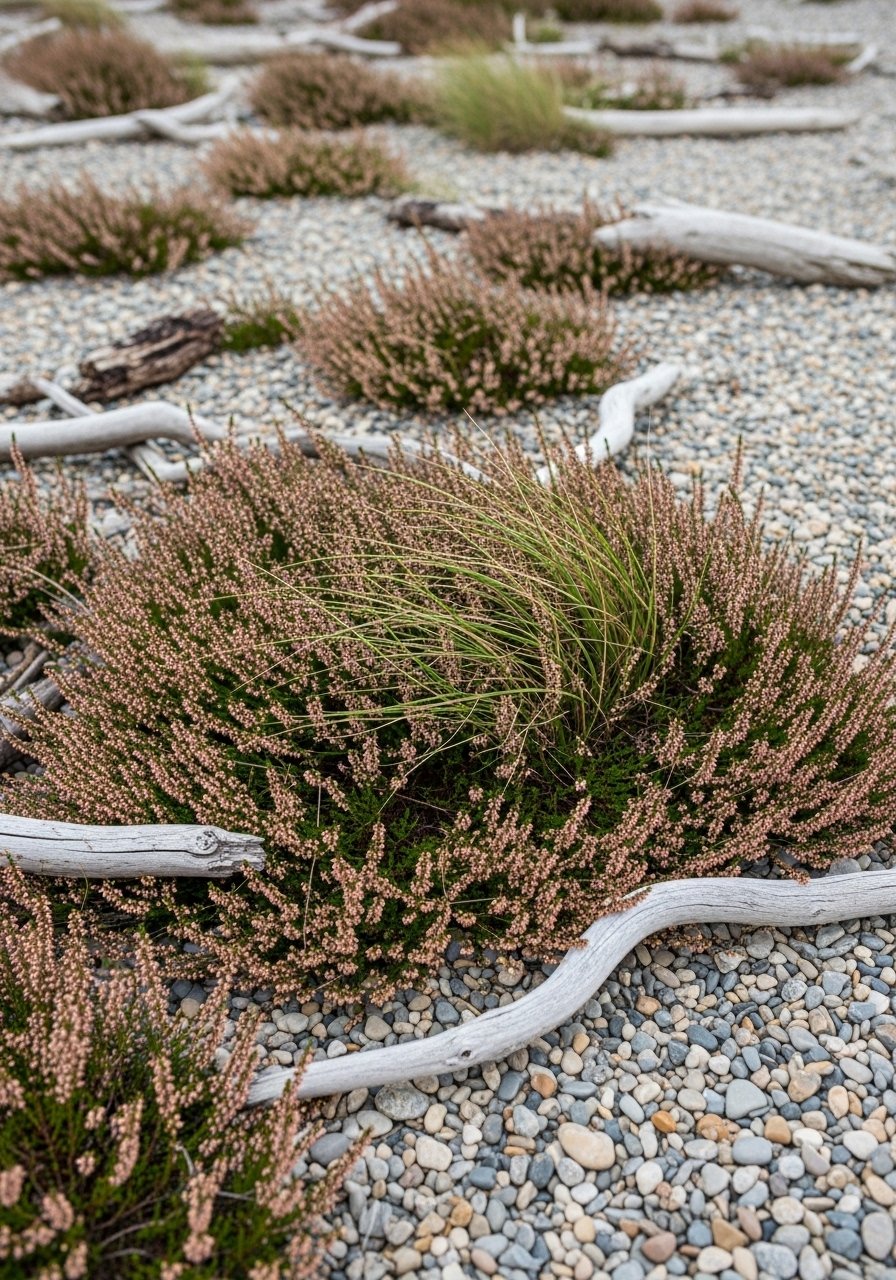
On a windy, coastal strip I planted low heather with a rock mulch. The heather holds its leaves and the gravel reduces salt splash. I initially used organic mulch and lost plants to wind-blown rot—stone mulch suits this site.
It stays evergreen and tolerates exposure.
Tip: choose varieties rated for coastal conditions.
What You’ll Need for This Look
29. Groundcover Boxwood for Formal Edges That Stay Green
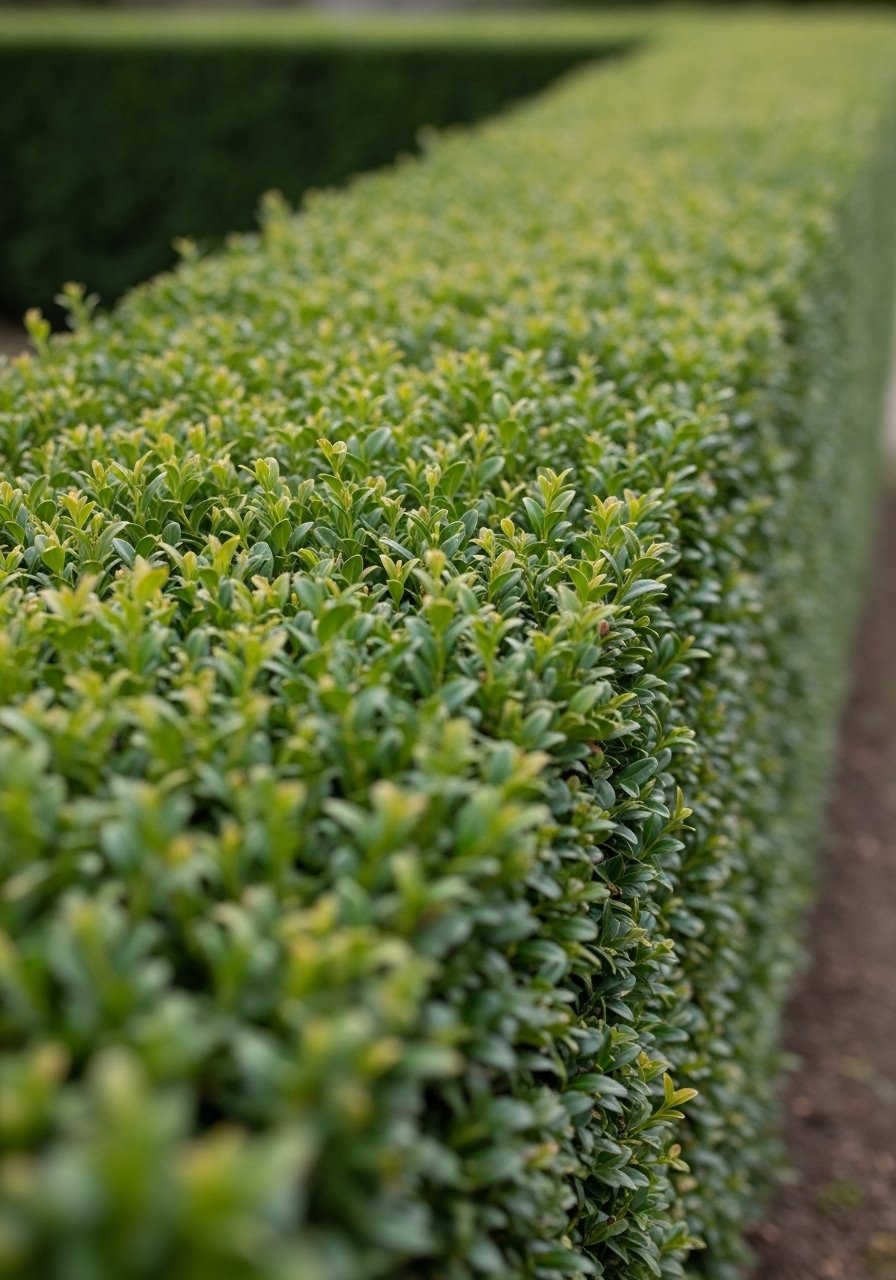
I use low boxwood as a clipped ground layer for formal paths. It gives evergreen structure and neat edges. I once let deer nibble a patch—choose deer-resistant varieties or protect young plants.
It stays compact with light trimming.
Tip: prune in late spring to keep dense form.
What You’ll Need for This Look
Final Thoughts
Evergreen ground cover plants keep a garden readable when everything else sleeps. Start small and build confidence.
You don’t need every plant here. Pick a few that match your light, soil, and style. I promise they’ll reward steady, simple care.
Leave a Reply