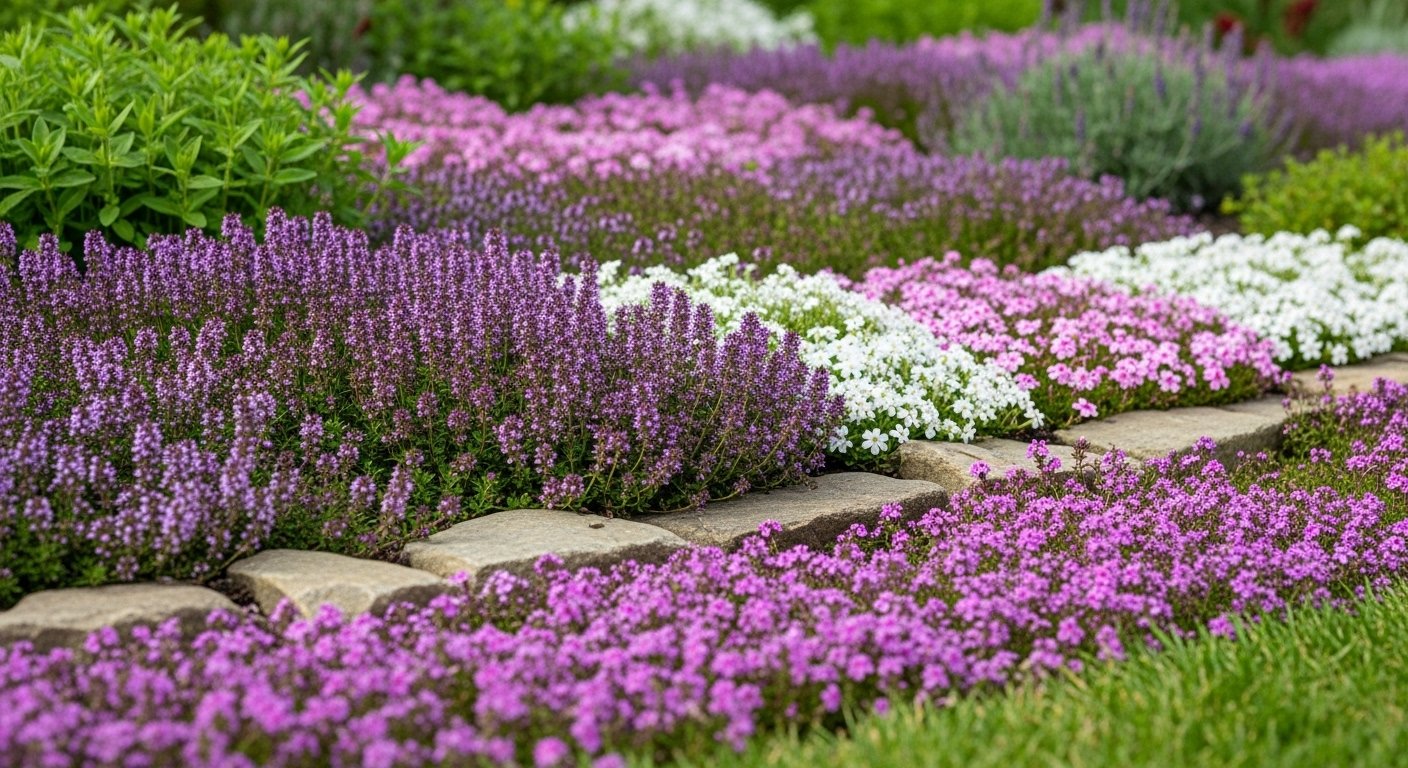
I finally stopped overthinking low plants. I planted small things where they could actually spread and breathed easier when they filled gaps.
These ground covers have become my go-to fixes for tired borders. They’re practical, colorful, and forgiving.
22 Gorgeous Flowering Ground Cover Plants For Colorful Garden Borders
These 22 ideas are plants and planting combos I’ve used in real, messy gardens. Each one shows what to expect and what to buy. You’ll get 22 clear, usable looks.
1. Creeping Thyme Mats That Smell Like Summer
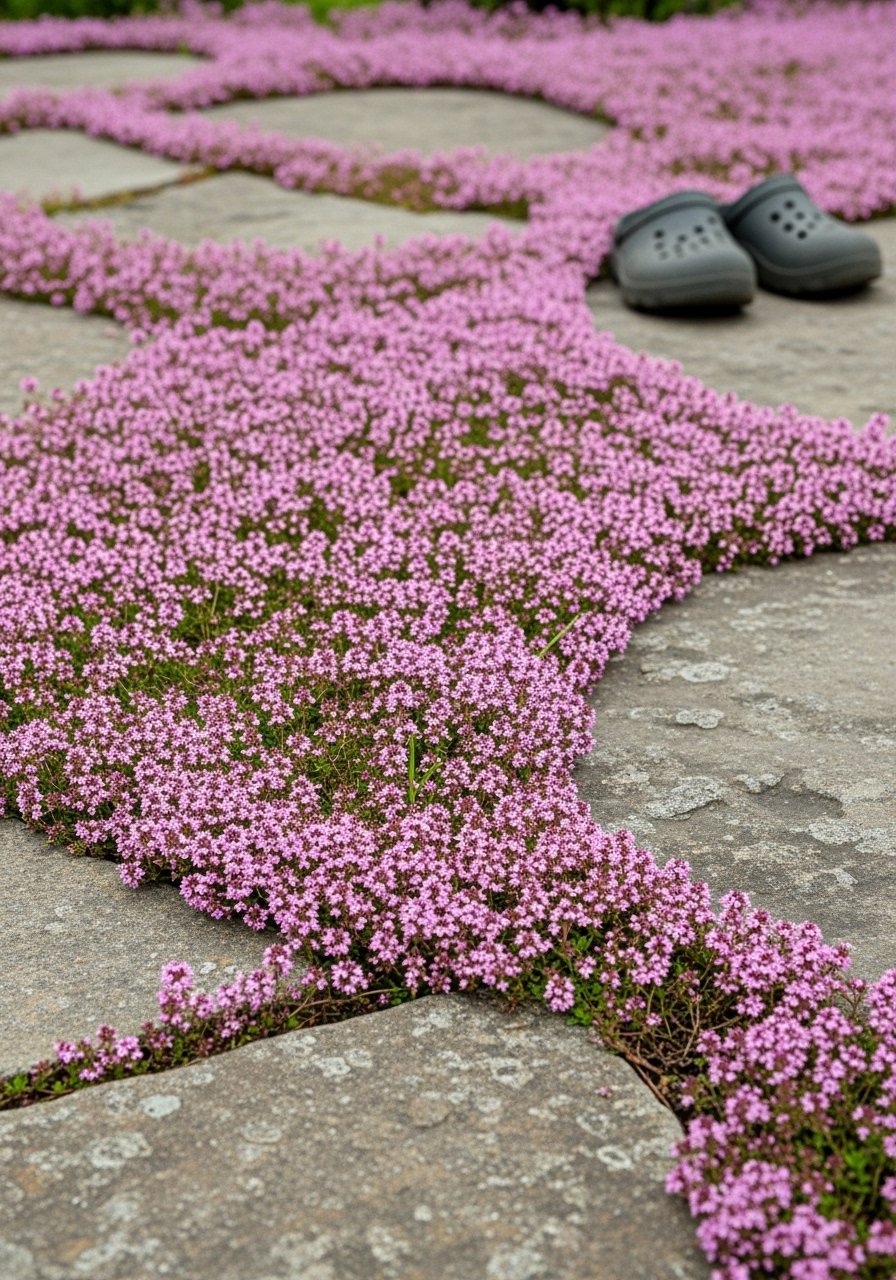
I planted creeping thyme along a sun-warmed path and stepped on it every day. The scent when you brush it is exactly why I keep it. It fills gaps, tolerates light foot traffic, and carpets out weeds if you give it sun.
The blooms are tiny but packed with pollinators. I did overplant once and had to thin it after a year—lesson learned.
What to watch: needs sharp drainage and full sun. Trim after flowering to keep it tidy.
What You’ll Need for This Look
- Creeping thyme plants (full sun, 4–6 inch plugs)
- Sharp sand for drainage (coarse)
- Flat stepping stones (12–16 inch)
2. Spring Carpet with Creeping Phlox
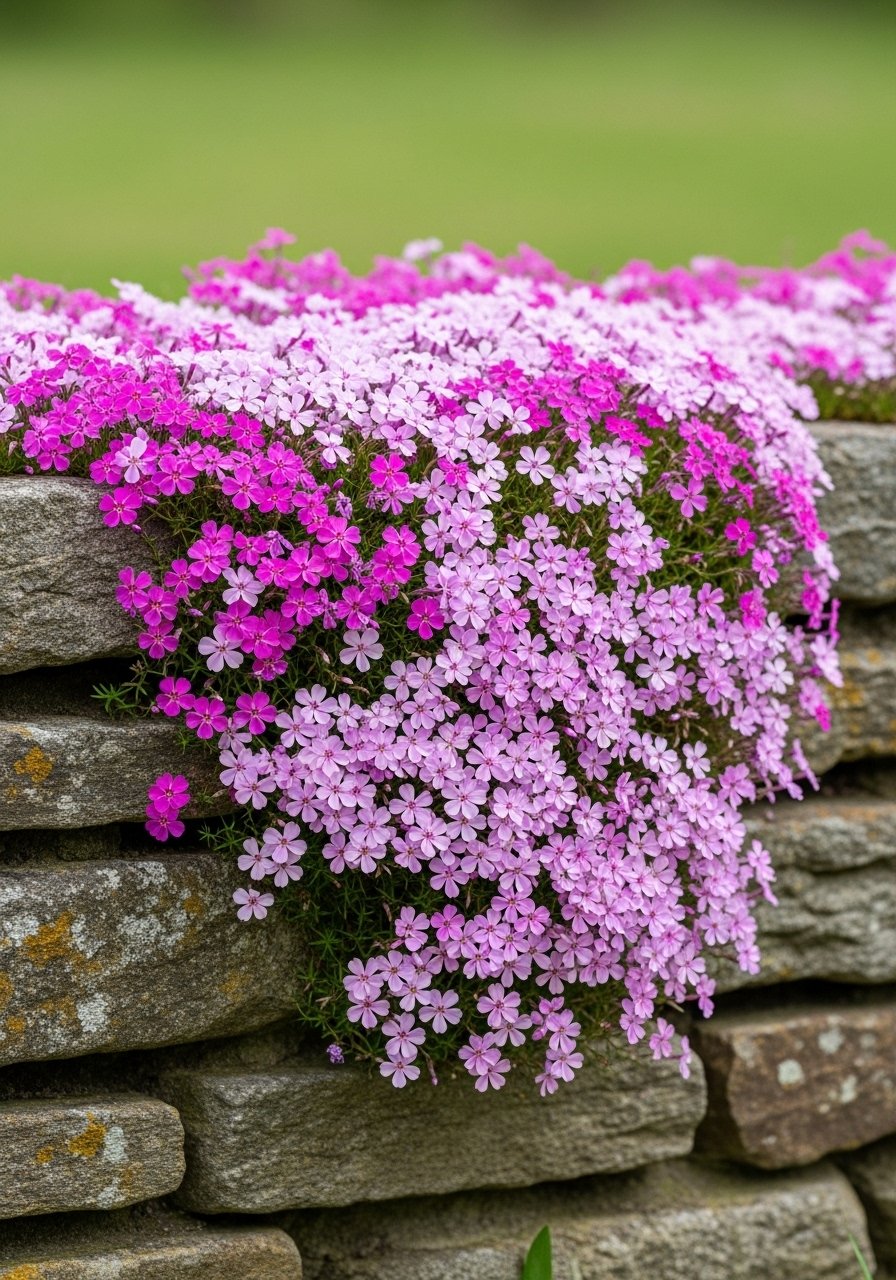
I have a thin slope where nothing else wanted to grow; creeping phlox changed that in one spring. The color surge is immediate and covers bare soil in a way that feels intentional, not frantic.
It dies back after bloom but leaves fresh foliage. I learned to avoid planting too close to taller perennials or it can get smothered.
What to watch: needs sun and lean soil. Feed lightly in spring for stronger blooms.
What You’ll Need for This Look
- Creeping phlox plants (assorted colors, 4–6 inch)
- Low fertility soil mix (for lean conditions)
- Hand garden trowel (stainless)
3. Shady Edge with Ajuga 'Chocolate Chip' (and my one big mistake)
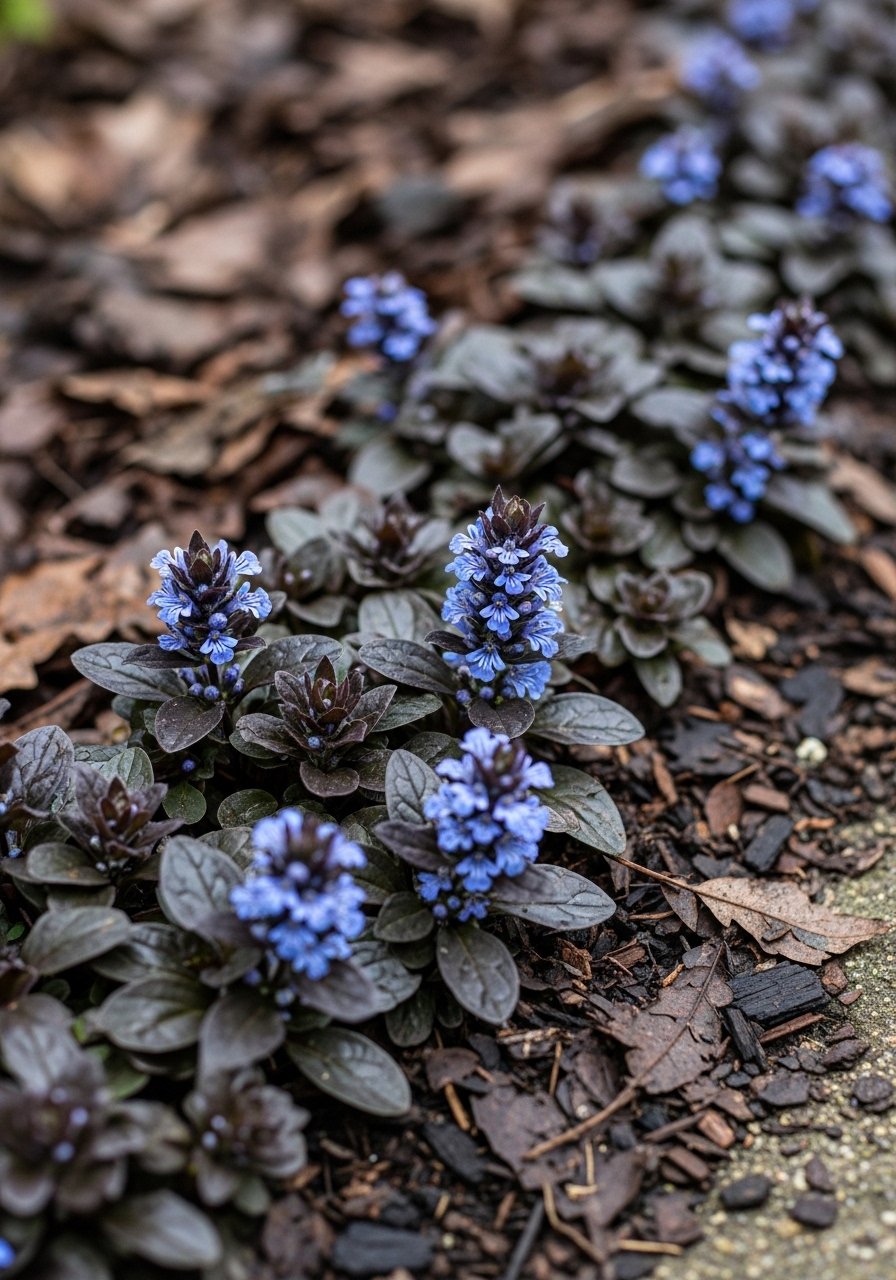
I loved Ajuga’s dark leaves in shade, so I planted a long run. It looked great for two seasons, then decided to spread into my hostas. My mistake: I ignored its habit. It’s fantastic for instant color but can be bossy.
It tolerates wet shade and forms a low, shiny carpet. I now use it where I want a bold accent and keep a small border edge to stop runaway runners.
What You’ll Need for This Look
- Ajuga 'Chocolate Chip' plants (shade-tolerant plugs)
- Steel garden edging (6 inch)
- Leaf mulch (shaded bed mix)
4. Slope Anchoring with Vinca Minor (Periwinkle)
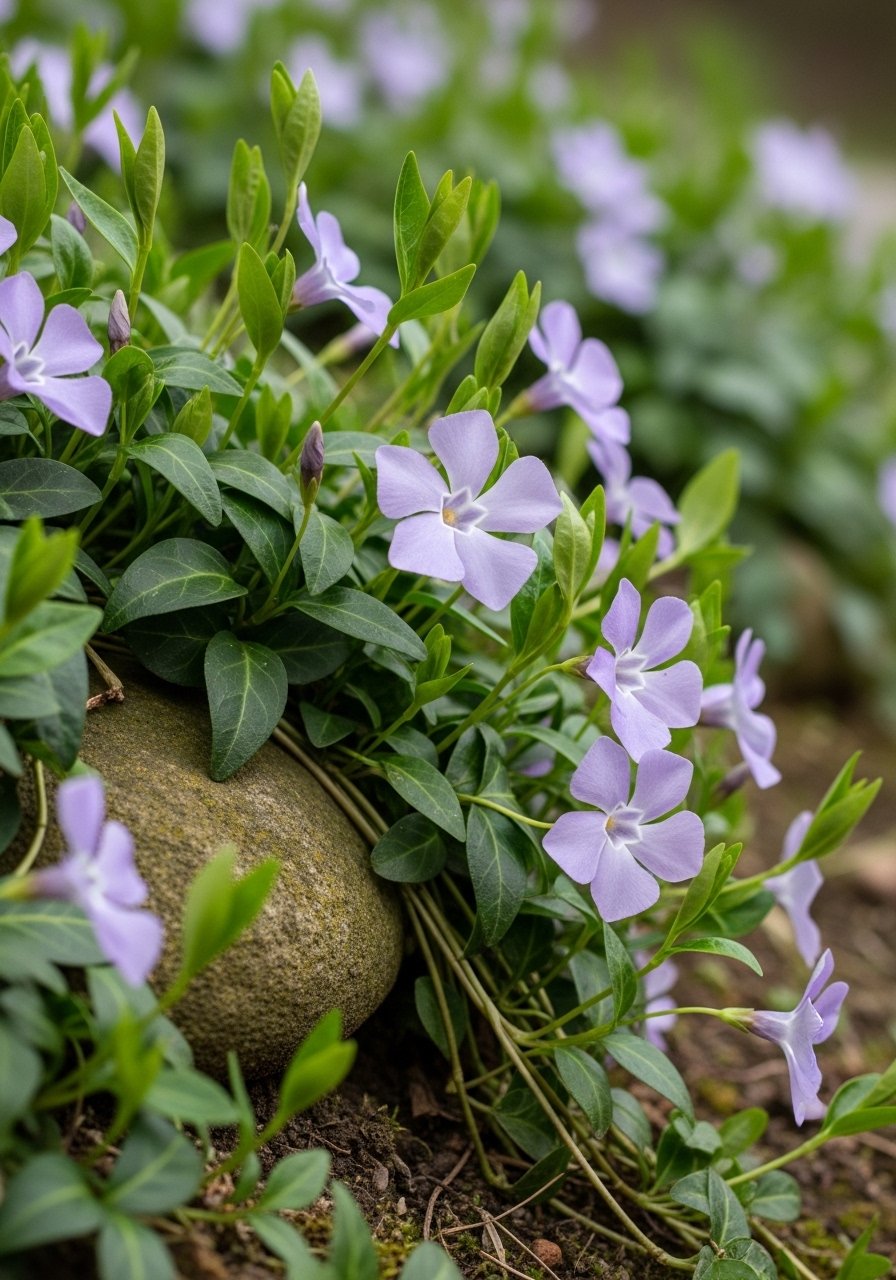
I use Vinca on slopes where erosion is the enemy. It establishes quickly, keeps soil in place, and stays reasonably neat year-round. The glossy leaves give a steady green backdrop, and the little flowers are a quiet bonus.
It tolerates light shade and drought once established. I watch for it creeping into beds where I want other plants to shine.
What You’ll Need for This Look
- Vinca minor plants (periwinkle, evergreen plugs)
- Erosion control mat (biodegradable)
- Landscape staples (galvanized)
5. Variegated Lamium Under Shrubs
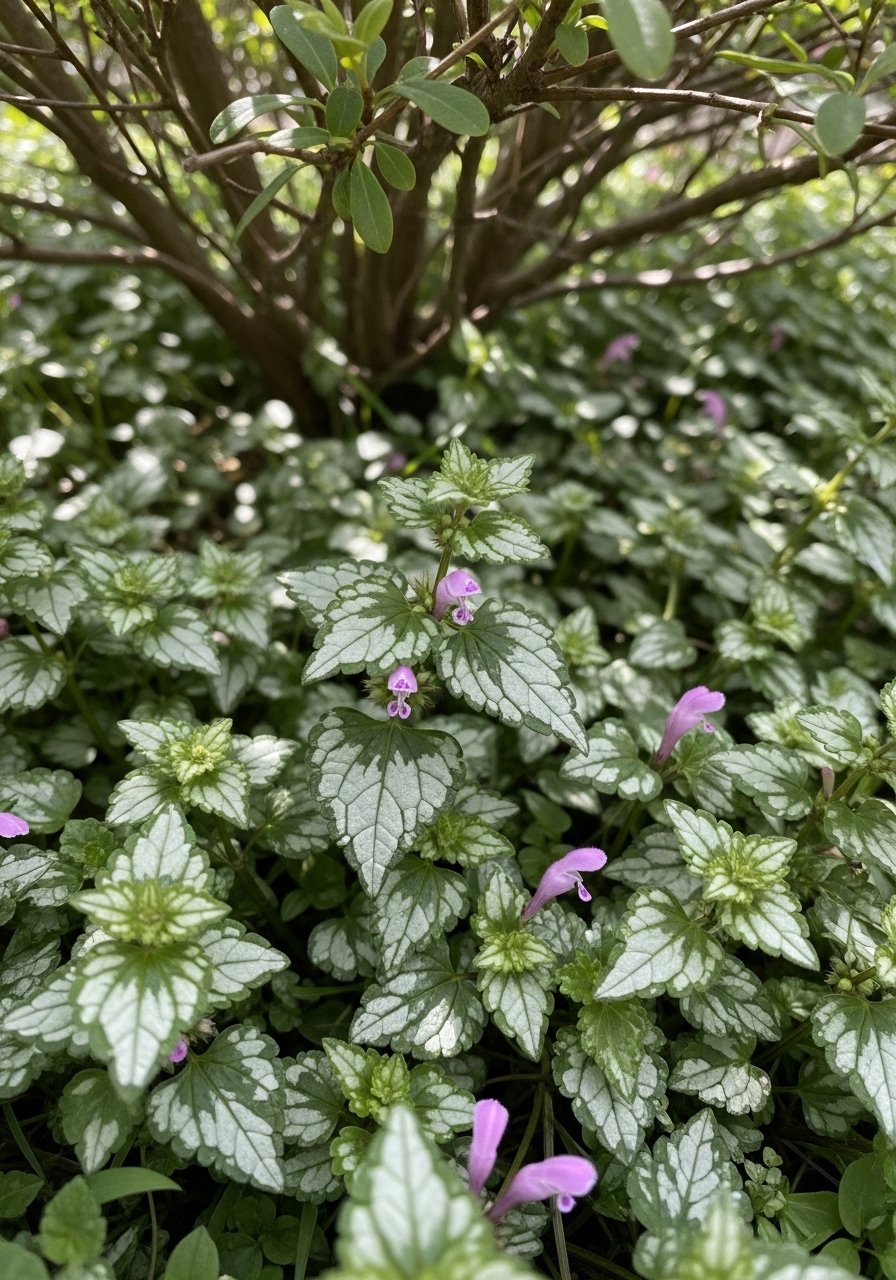
I put Lamium beneath a spindly viburnum and it filled the empty space with soft variegated leaves. It’s one of those plants that reads bright in shade and keeps things tidy without fuss.
It flowers in spring and often again later. I made the error once of planting it in too much sun; the leaves scorched. Now I reserve it for true shade or very light dapple.
What You’ll Need for This Look
- Lamium maculatum plants (variegated, shade plugs)
- Dapple shade garden soil mix
- Garden hand fork (for light cultivation)
6. Dry Border Drama with Sedum 'Dragon's Blood' (and my timing flub)
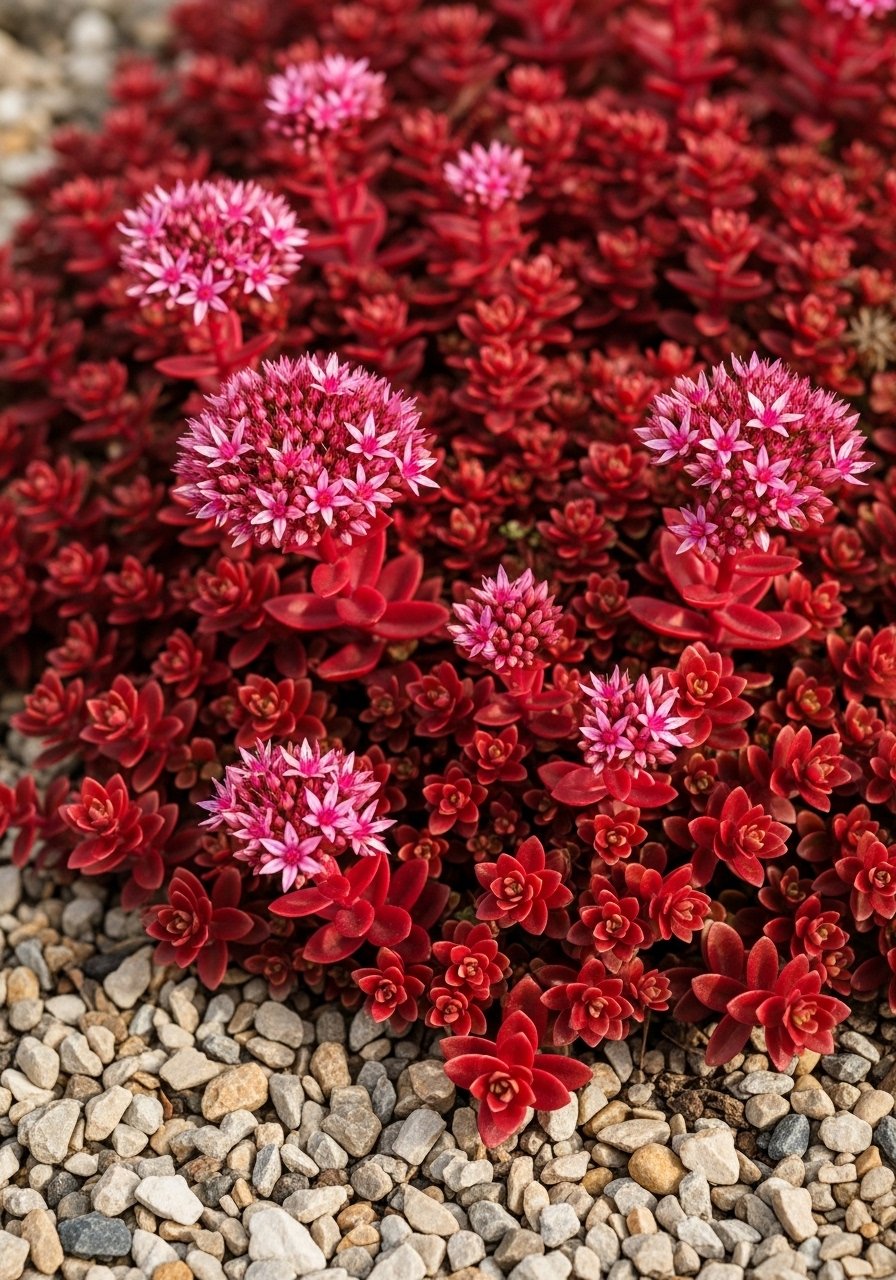
I used Dragon’s Blood on a hot, gravelly strip. The dark red leaves contrast with gravel and the blooms are surprisingly bright. It survives drought and looks clean through summer.
My mistake: I planted bare-root too late in spring and lost a few passes. Now I plant earlier and water in well at the start. It spreads slowly—good for low-maintenance sweeps.
What You’ll Need for This Look
- Sedum 'Dragon's Blood' plants (sun, drought-tolerant)
- Gravel mulch (pea gravel, 1/4 inch)
- Soaker hose (for initial establishment)
7. Silver Glow with Snow-in-Summer (Cerastium tomentosum)
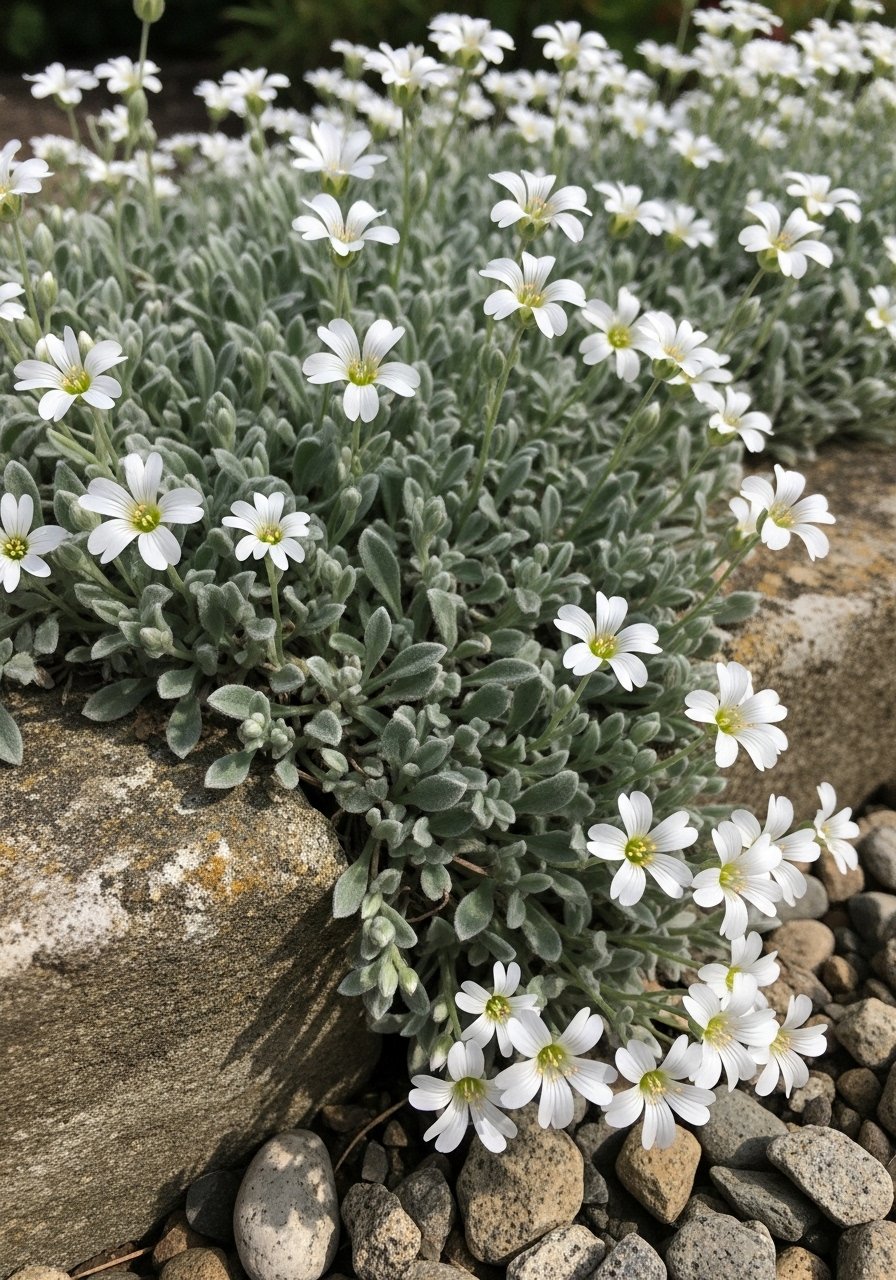
I use Snow-in-Summer where I want a cool counterpoint to bright blooms. The silver foliage reads like a soft blanket and the white flowers are a clean punctuation in late spring.
It tolerates poor soil and baked spots. It’s tidy if you don’t overwater. I once planted it in rich compost and it sulked, so keep the soil lean.
What You’ll Need for This Look
- Snow-in-Summer plants (Cerastium, full sun plugs)
- Limestone edging stones (low wall)
- Coarse gravel (to keep soil lean)
8. Scented Ground with Geranium macrorrhizum
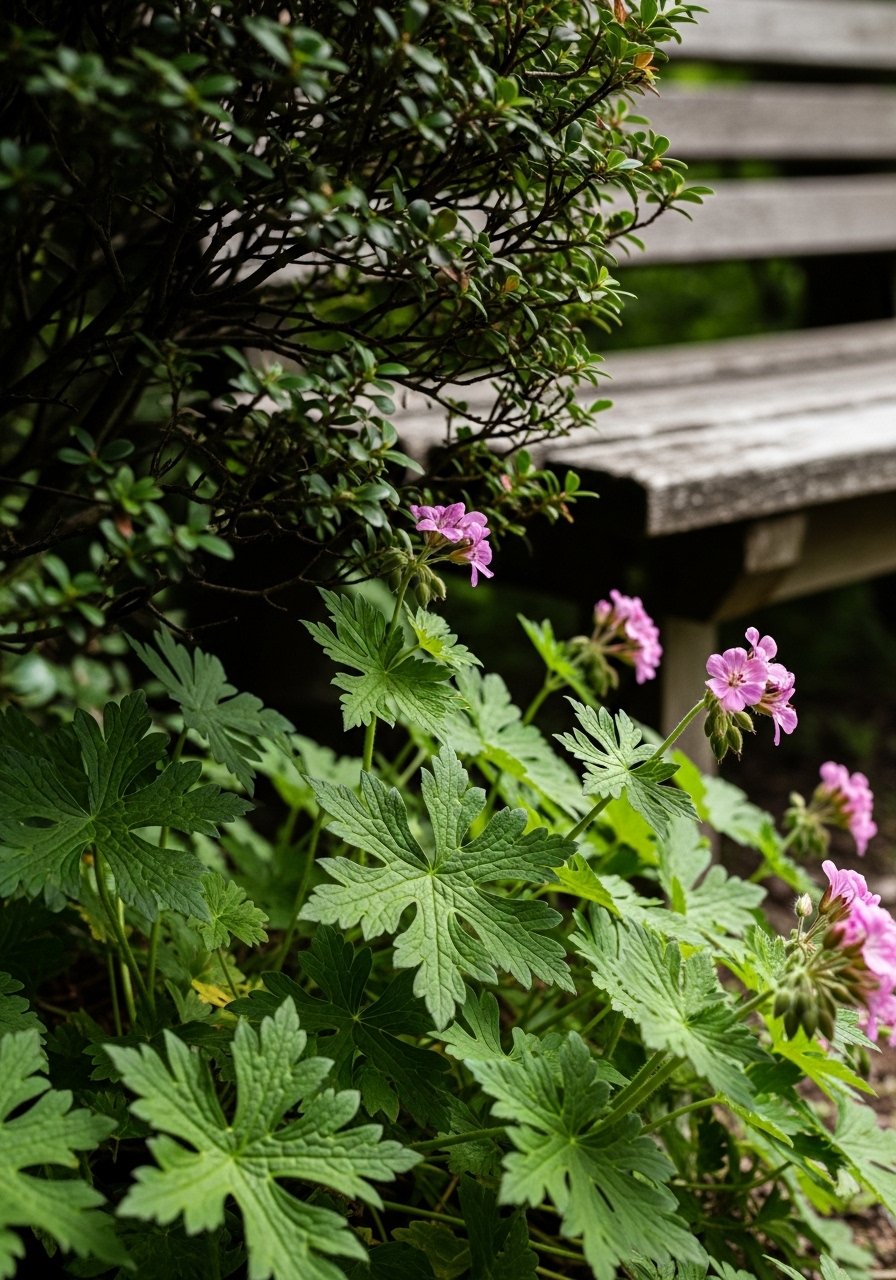
I planted this geranium where I wanted scent and cover. The leaves smell faintly piney when crushed, which I love when I’m weeding. It’s evergreen-ish and makes a steady low mound of foliage.
The flowers are small but the overall effect is a tidy, aromatic carpet. It resists deer and is tough in poor soils.
What You’ll Need for This Look
- Geranium macrorrhizum plants (scented, shade to part sun)
- Small wooden garden bench (accent seating)
- Slow-release fertilizer (balanced, light feed)
9. Catmint as an Informal Edge (and the deer test)
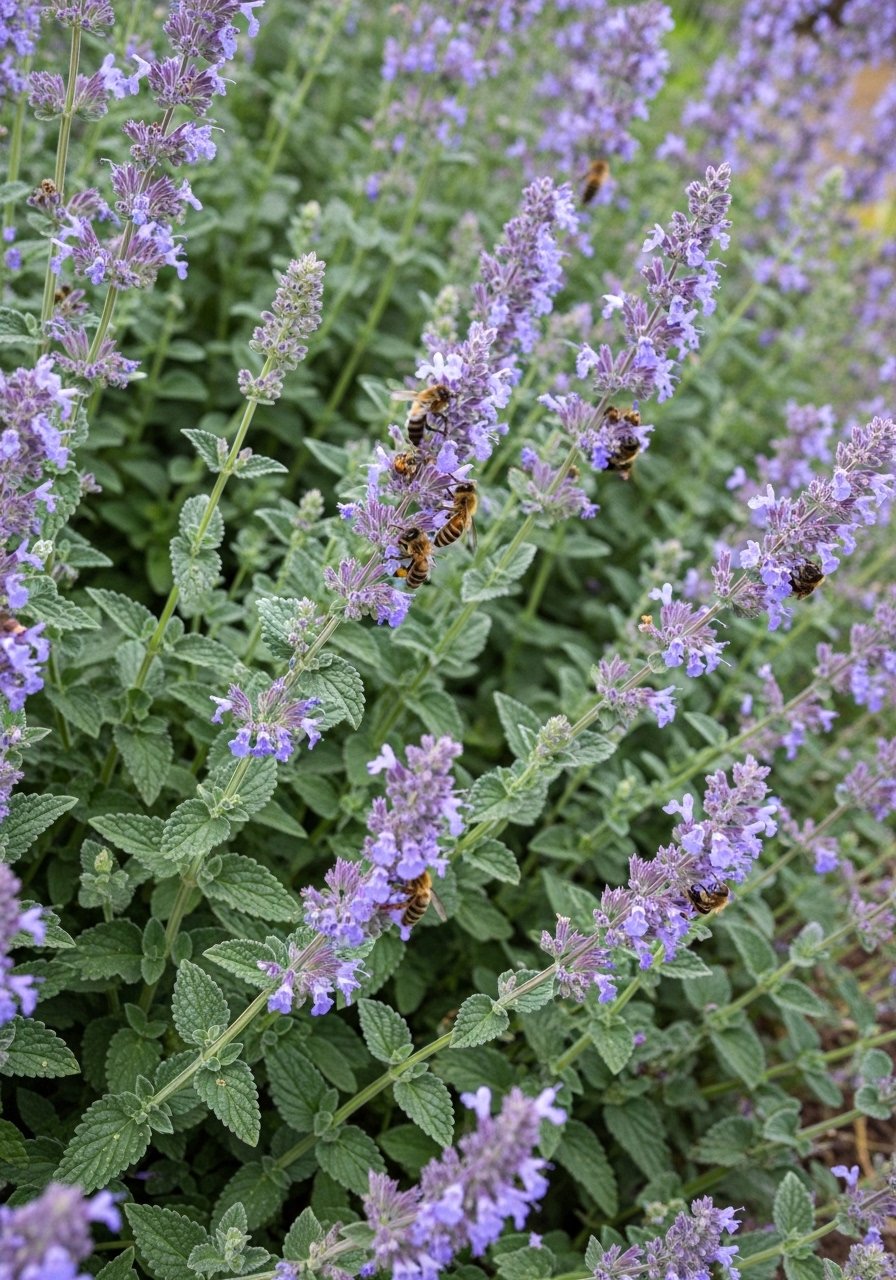
I planted Nepeta along a front border for a relaxed spill of silver foliage and long blue flowers. It blooms forever if you deadhead lightly and softens hard edges.
It attracts bees and smells herbal when brushed. I once thought deer wouldn’t touch it—wrong. In a high-deer year I lost a few patches, so I pair it with stronger plants now.
What You’ll Need for This Look
- Nepeta (catmint) plants (lavender-blue flowers)
- Deer-resistant planting guide (book)
- Bypass garden pruners (for light deadheading)
10. Sweet Violets for a Cozy Cottage Edge
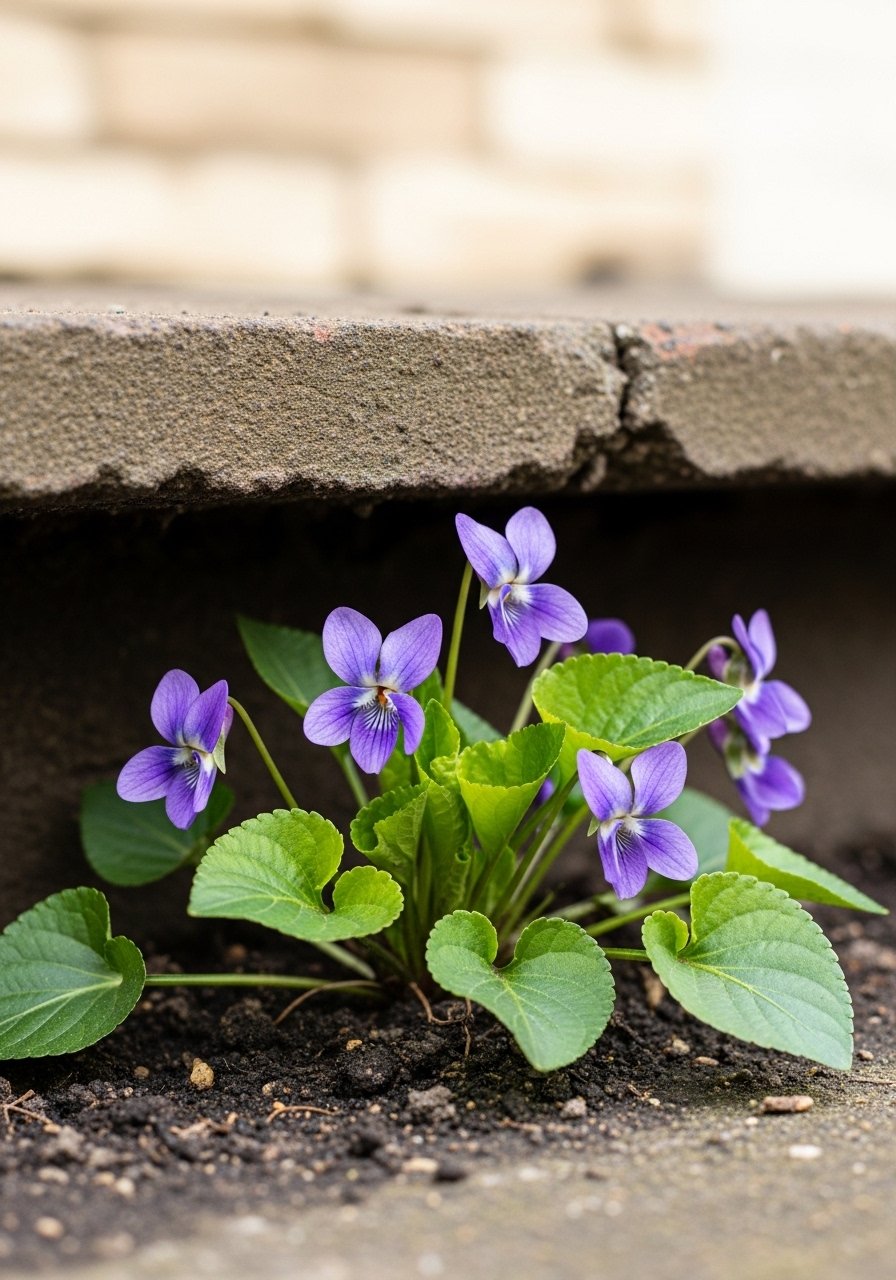
Sweet violets came back every spring along a shady border I mostly ignored. They’re humble but add a soft cottage feel and a sweet, low scent if you lean in.
They spread slowly and tolerate light shade and moisture. I let them naturalize into a soft patch rather than fighting to keep them formal.
What You’ll Need for This Look
- Sweet violet plants (Viola odorata, shade-tolerant)
- Peat pots (for transplanting small plugs)
- Moisture meter (to check damp shade)
11. Rock-Edged Candytuft for Clean White Blooms
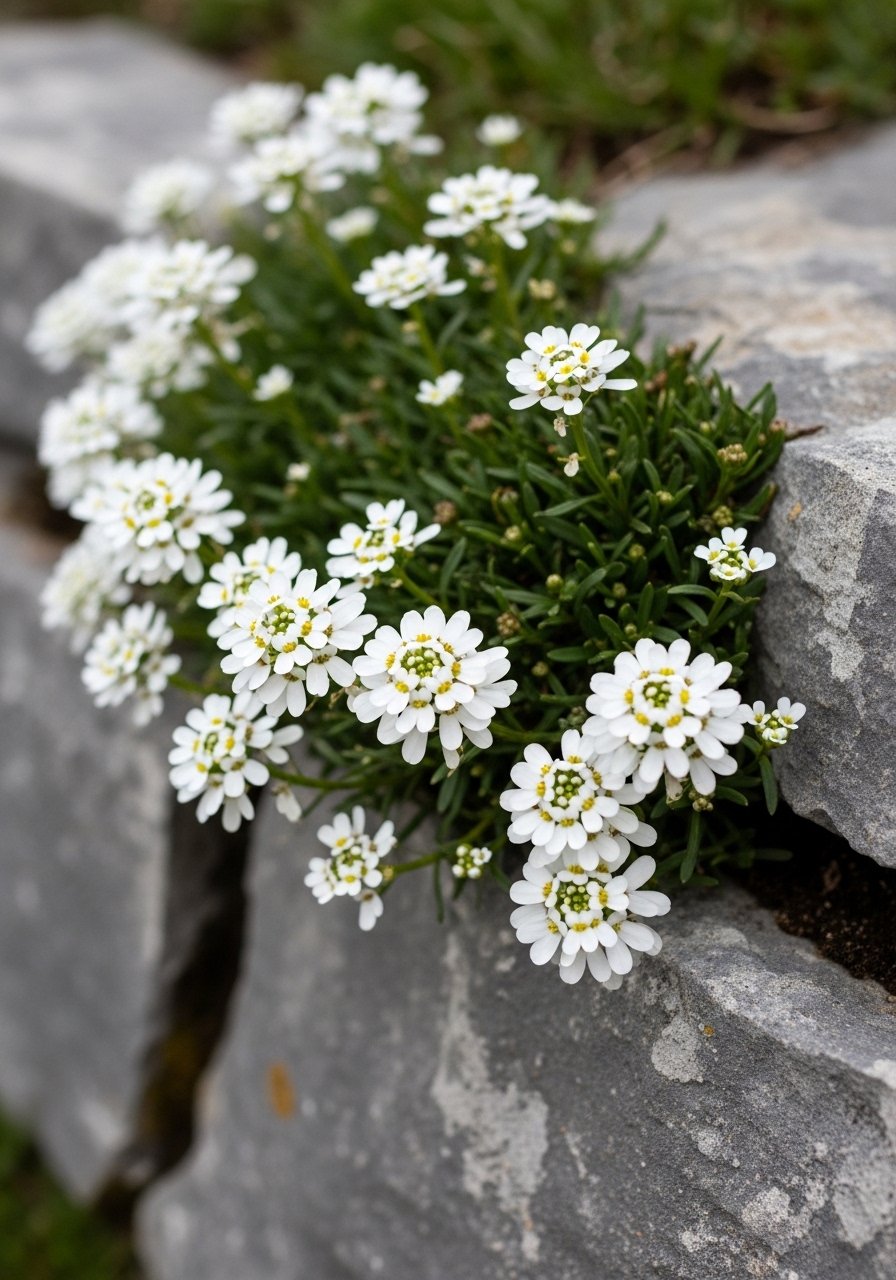
I use candytuft at the front of beds where I want a neat, white edge in spring. It holds a compact mound and the white clusters are a crisp contrast next to textured foliage.
It likes sun and good drainage. I learned to prune lightly after flowering to keep the shape and encourage a fresh flush the next year.
What You’ll Need for This Look
- Iberis sempervirens plants (candytuft, white bloom)
- Rock edging stones (low)
- Light hand pruners (for shaping)
12. Trailing Lobelia for Bright Container Borders (I under-watered once)
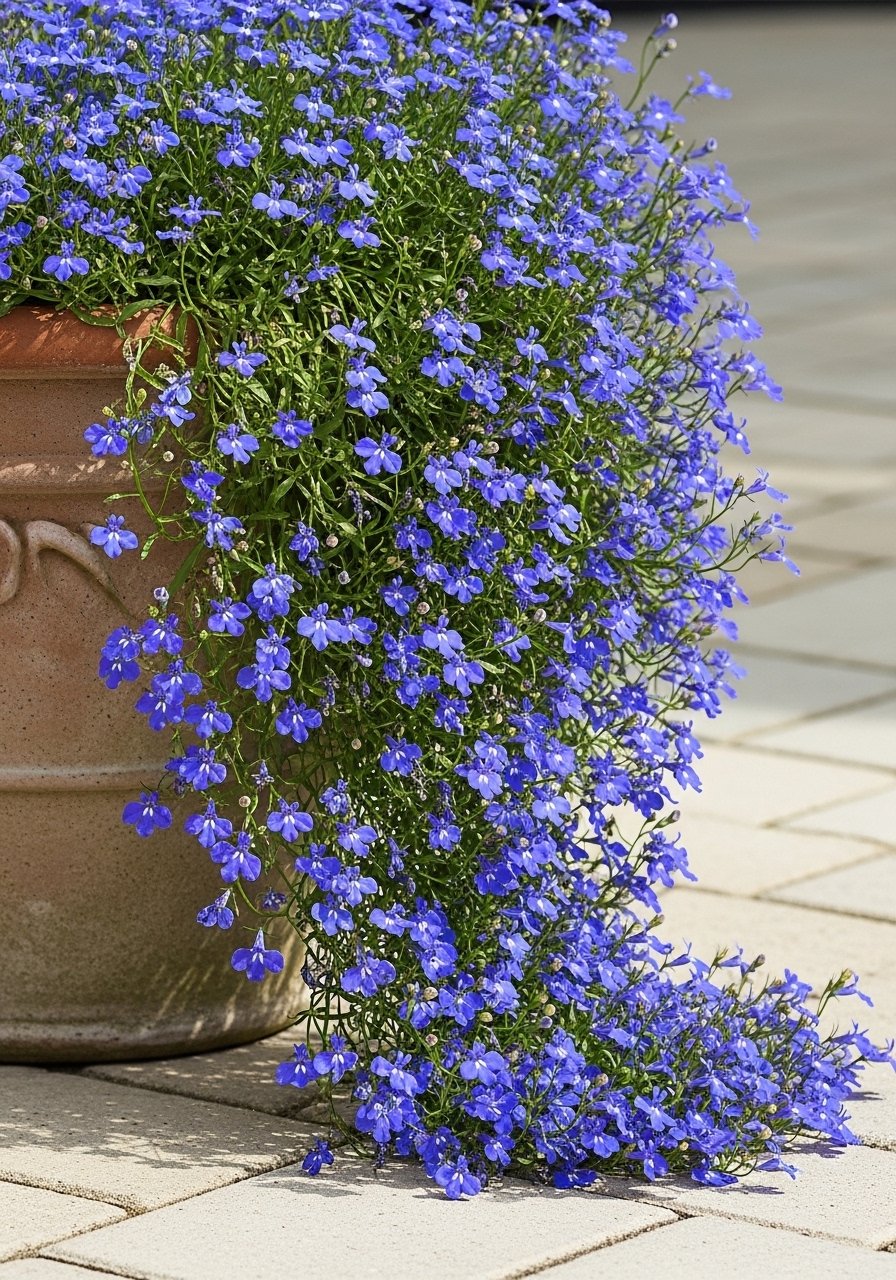
I plant trailing lobelia in low pots to spill color over a patio edge. It’s one of those plants that reads like a ribbon of pure blue across the front. It multiplies the effect when mixed with a contrasting foliage plant.
I under-watered one season and watched it sulk quickly—lobelia likes regular moisture. Now I use it where I check pots often or pair with a self-watering insert.
What You’ll Need for This Look
- Trailing lobelia plants (Lobelia erinus, cobalt blue)
- Terracotta planter (12 inch, low)
- Self-watering pot insert (for consistent moisture)
13. Sweet Alyssum for a Fragrant Fringe
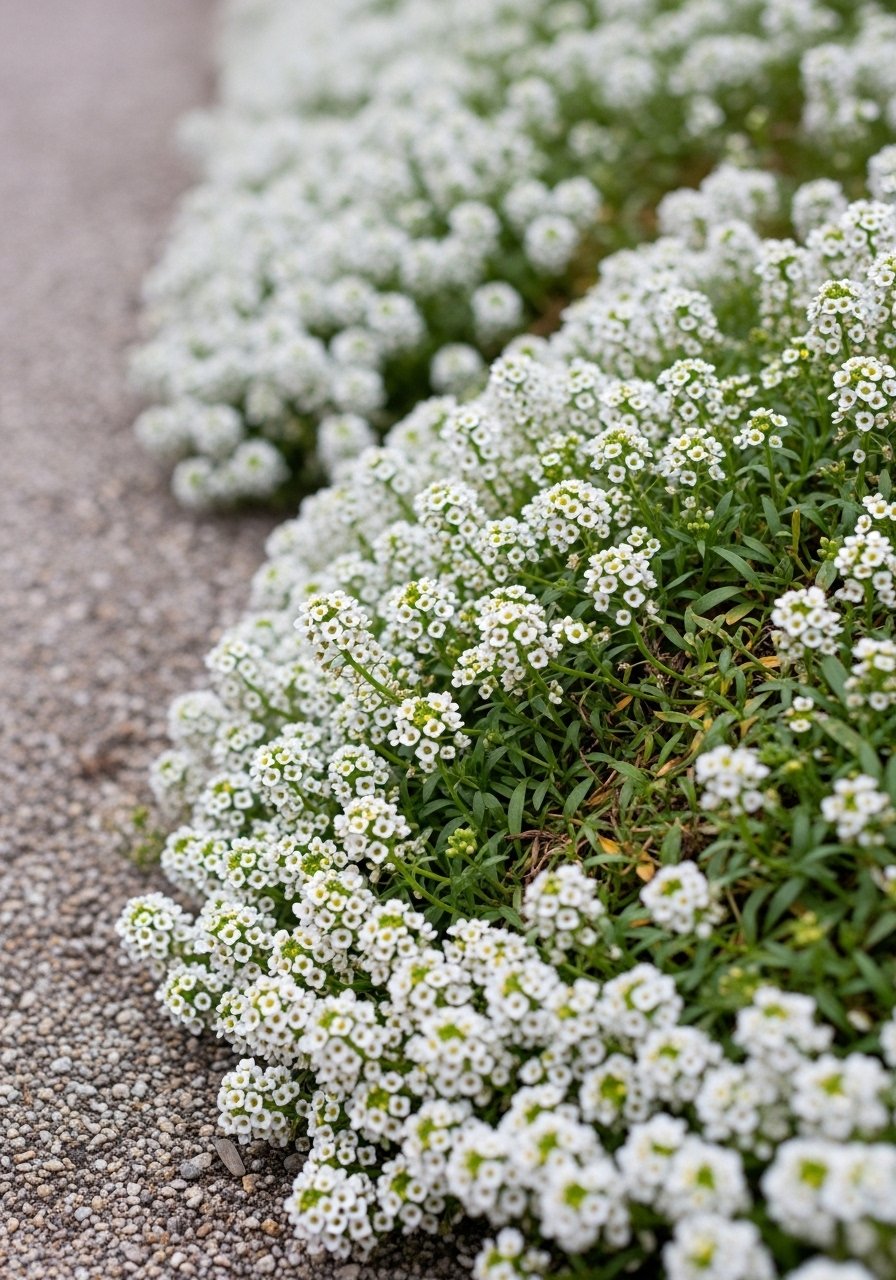
Sweet alyssum fills gaps with a low fragrant mat that bees adore. I use it in front of taller perennials to read like a soft ribbon of white or lavender each summer.
It’s short-lived in heat but reseeds freely where it likes the spot. I treat it like a seasonal filler and let it go to seed in quieter corners.
What You’ll Need for This Look
- Sweet alyssum seeds or plants (white or lavender)
- Gravel path edging (low)
- Hand seed sower (for spreading seeds)
14. Sun-Worshipping Portulaca (Moss Rose) in Hot Patches
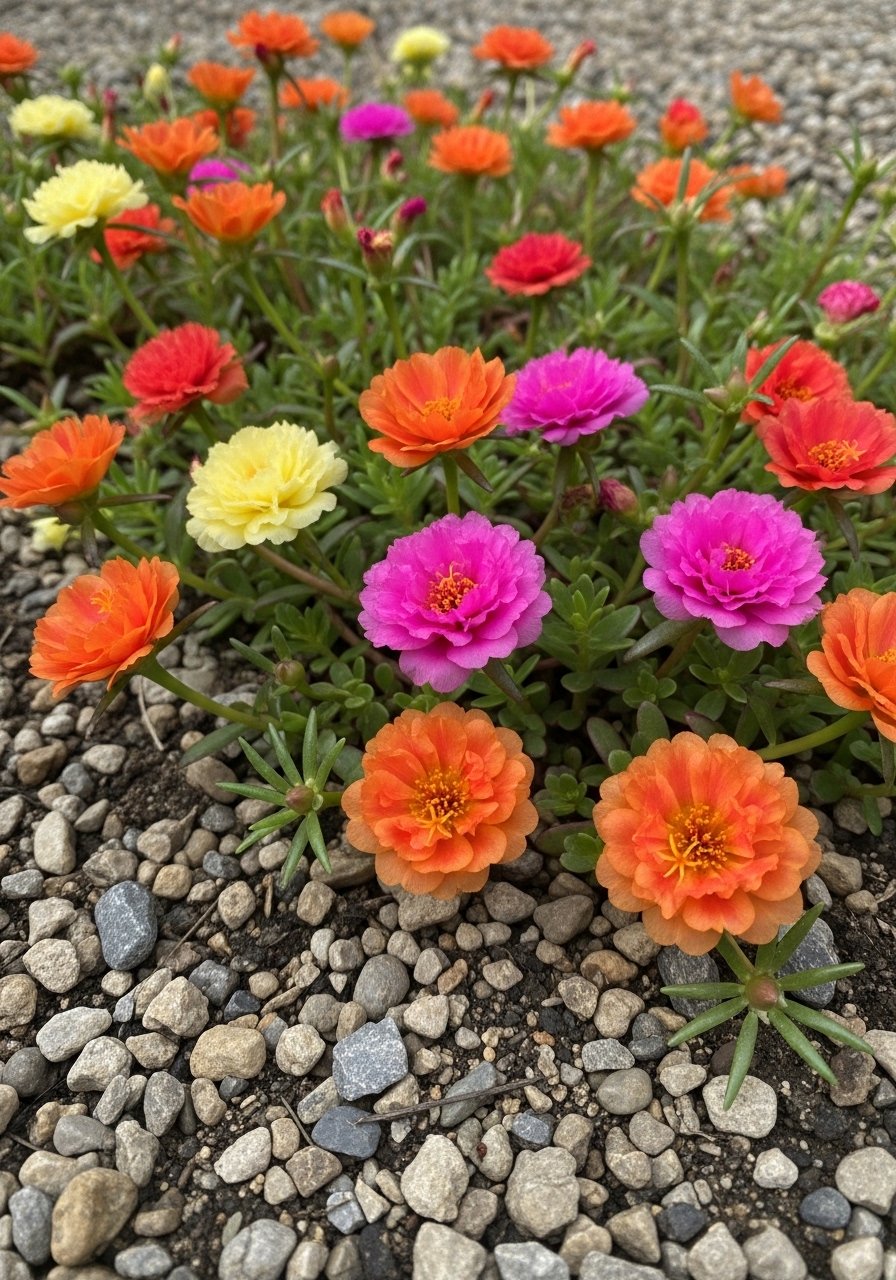
I planted portulaca in the hottest slot in my courtyard where everything else wilted. It thrives on heat, gives jewel-bright blooms, and tolerates poor soil.
It’s low-growing and drought-tolerant—perfect for tight sunlit spots. I don’t try to coax it into shade; it sulks there. Let it be a hot-spot plant and it rewards you.
What You’ll Need for This Look
- Portulaca (moss rose) plants (assorted bright colors)
- Sandy soil mix (for hot, dry spots)
- Low profile planters (for tight sunny areas)
15. Crevice Planting with Saxifraga x urbium (London Pride)
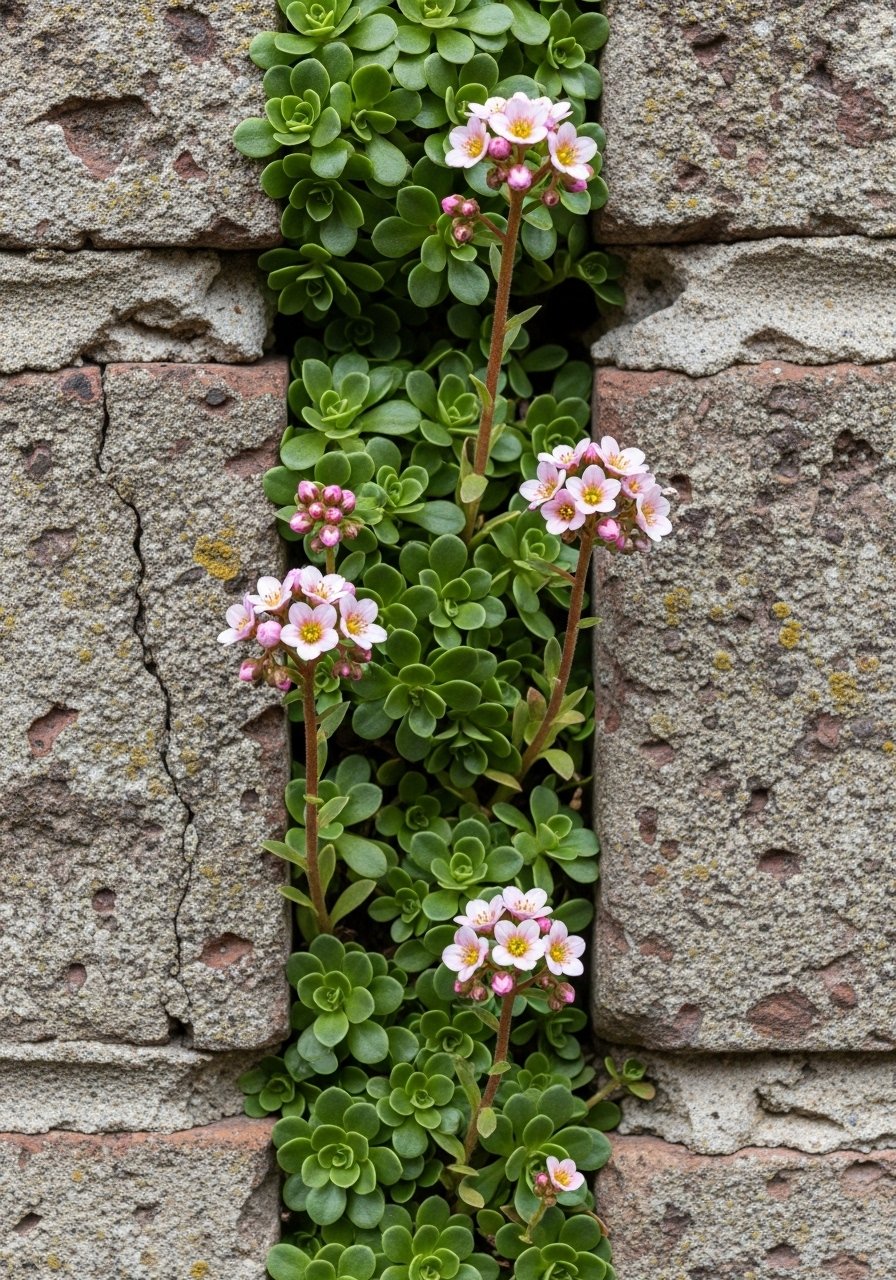
I push Saxifraga into rocky crevices and small gaps in a stone retaining wall. It roots into thin pockets of soil and rewards with starry clusters in spring.
It’s modest but invaluable where nothing else will stay. I once used too rich a compost and it lost its compact habit—keep the soil shallow and gritty.
What You’ll Need for This Look
- Saxifraga x urbium plants (crevice-friendly)
- Gritty soil mix (for shallow pockets)
- Narrow hand trowel (for tight spots)
16. Early Spring Flash with Euphorbia 'Efanthia' (Cushion Spurge)
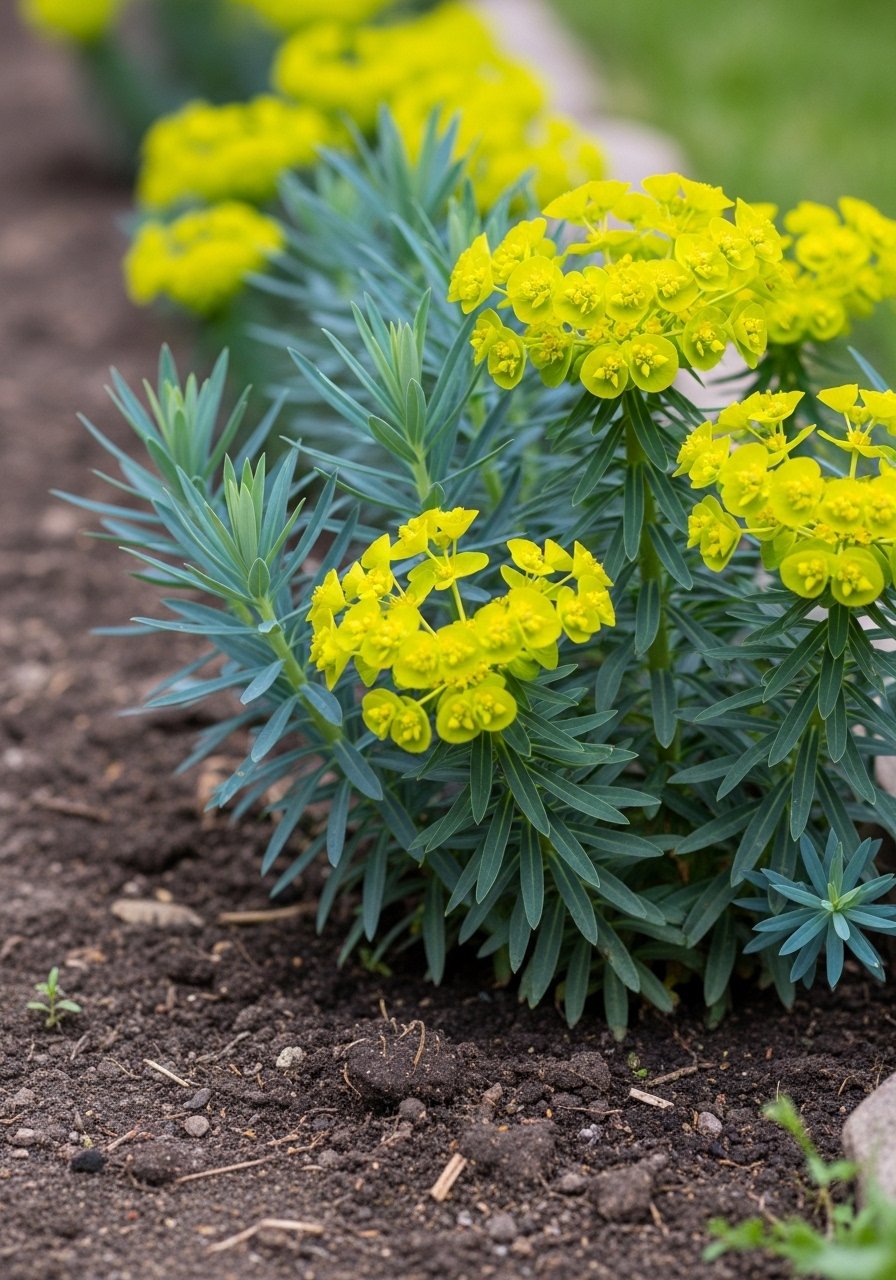
Cushion spurge is my early-spring insurance policy. The chartreuse bracts light up a bed before other colors arrive and the foliage holds interest later.
It’s not a classic flower show, but it sets the tone. I learned to cut back the old foliage in late winter for a fresh, clean mound in spring.
What You’ll Need for This Look
- Euphorbia polychroma plants (chartreuse spring color)
- Winter pruning gloves (for safe cleanup)
- Sharp garden shears (for tidying)
17. Edible Groundcover: Flowering Oregano
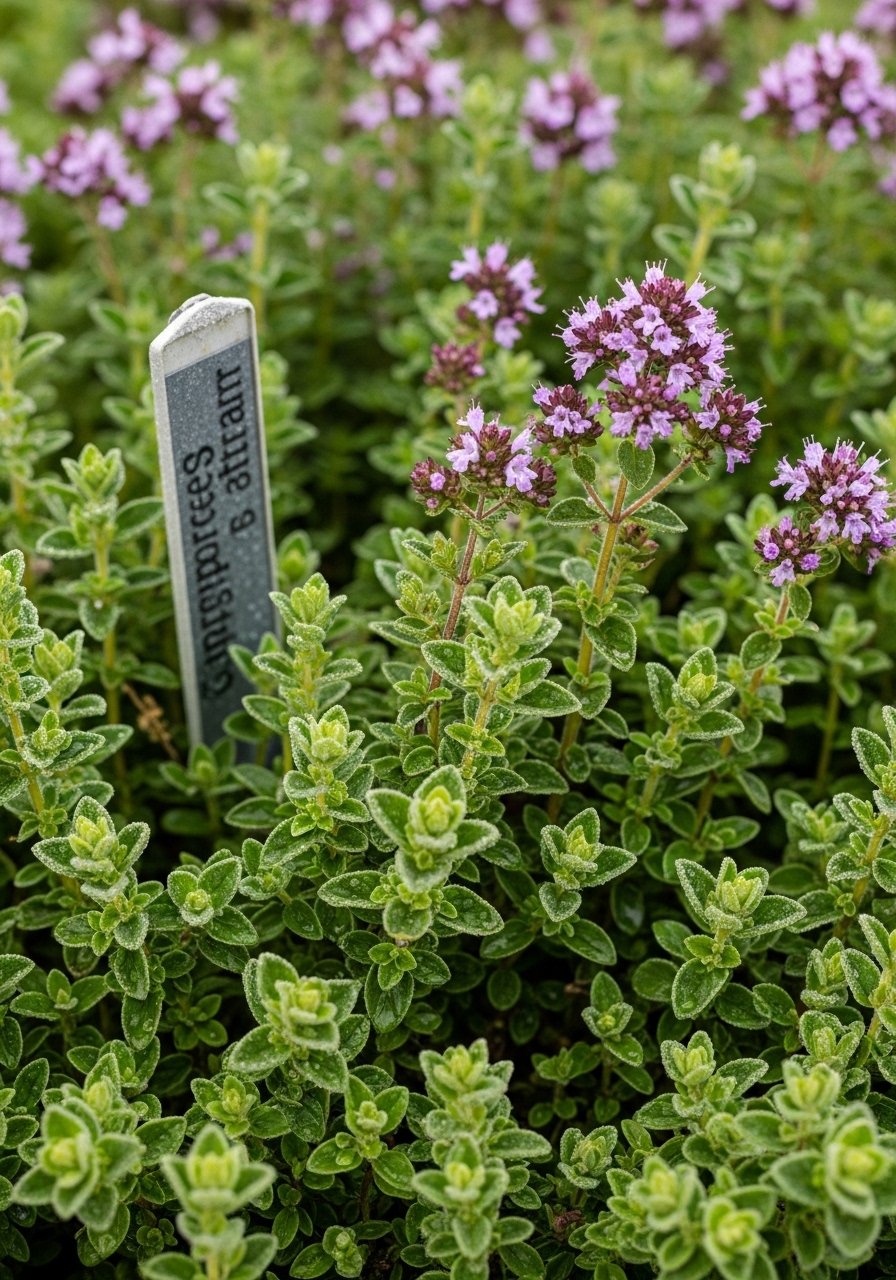
I planted oregano as a living mulch in a kitchen border. It smells of summer and the little flowers bring bees right to the herbbed. I can snip herbs and keep a pretty mat at the same time.
It likes sun and thin soil. It will flop if over-fertilized, so I avoid rich compost in its patch.
What You’ll Need for This Look
18. Prostrate Veronica for Long Blooming Color
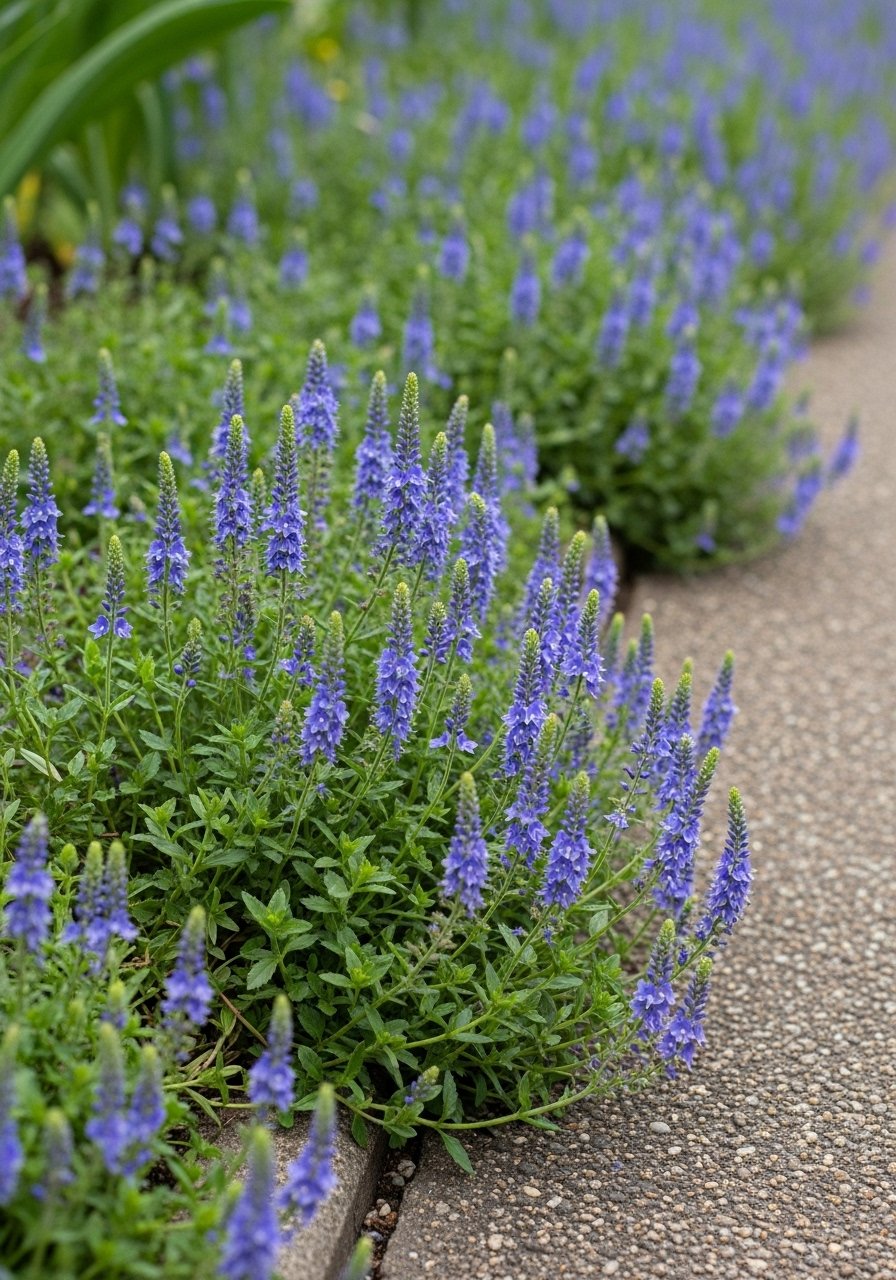
Veronica prostrata gives me a long season of spikes low to the ground. I plant it where I want a gentle rhythm rather than a solid carpet. The flowers push pollinators along the edge.
It likes sun and regular water at first. I prune lightly after the first flush to encourage a second wave.
What You’ll Need for This Look
- Veronica prostrata plants (prostrate speedwell)
- Garden spray bottle (for gentle watering)
- Thin mulch (to retain moisture)
19. Dwarf Dianthus ‘Maiden Pink’ for Fragrant Low Mounds
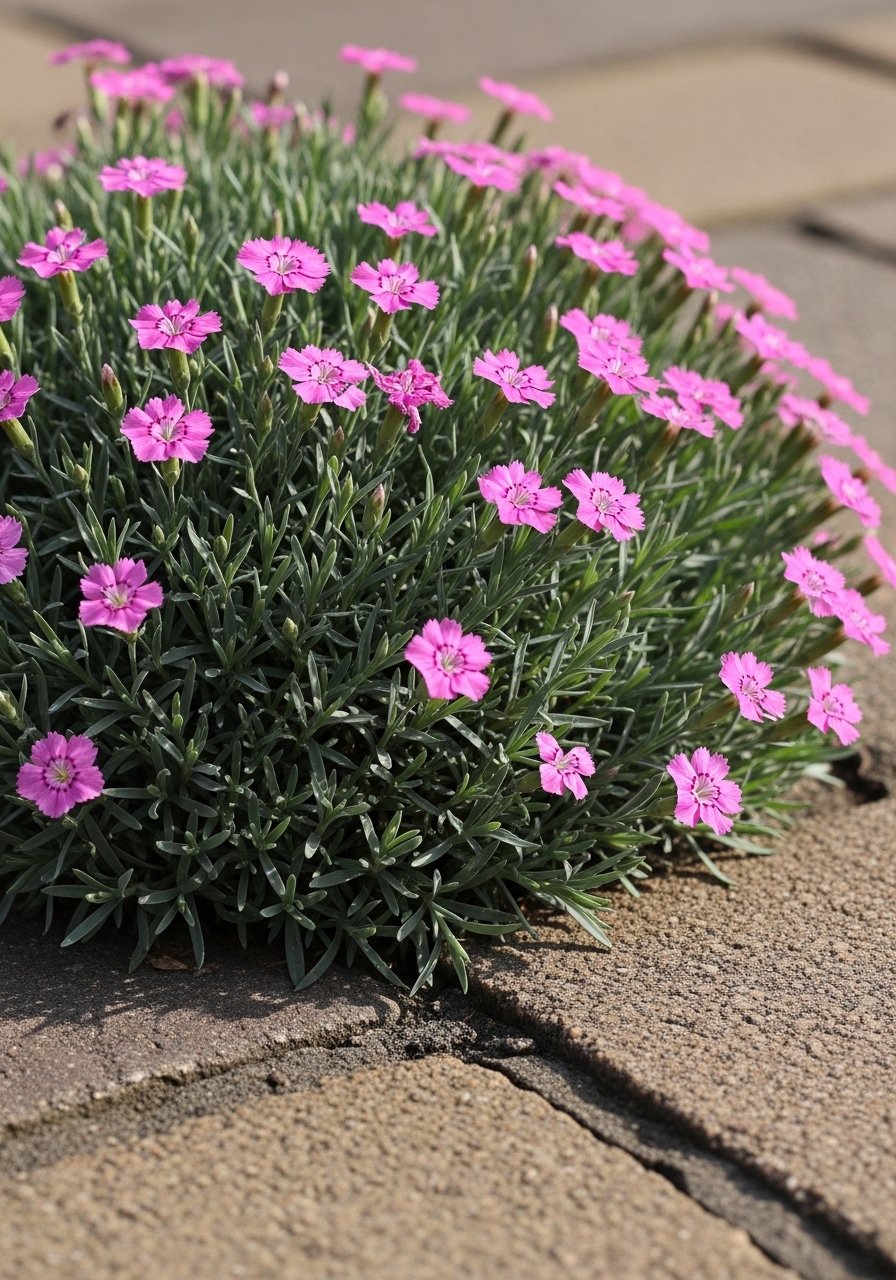
Dianthus makes a low, tight mound of fragrant flowers that I used between flagstones. The scent is noticeable on warm days and the petals have a neat, clipped look.
It prefers sun and lean soil. I once gave it too much feed and it lost its compact habit. Now I keep fertilizer light and deadhead for tidy repeat blooms.
What You’ll Need for This Look
- Dwarf Dianthus plants (maiden pinks)
- Flagstone jointing sand (for paving gaps)
- Deadheading snips (small)
20. Tiny Yellow Blazes with Sedum Acre (Goldmoss Stonecrop) — and my spread oops
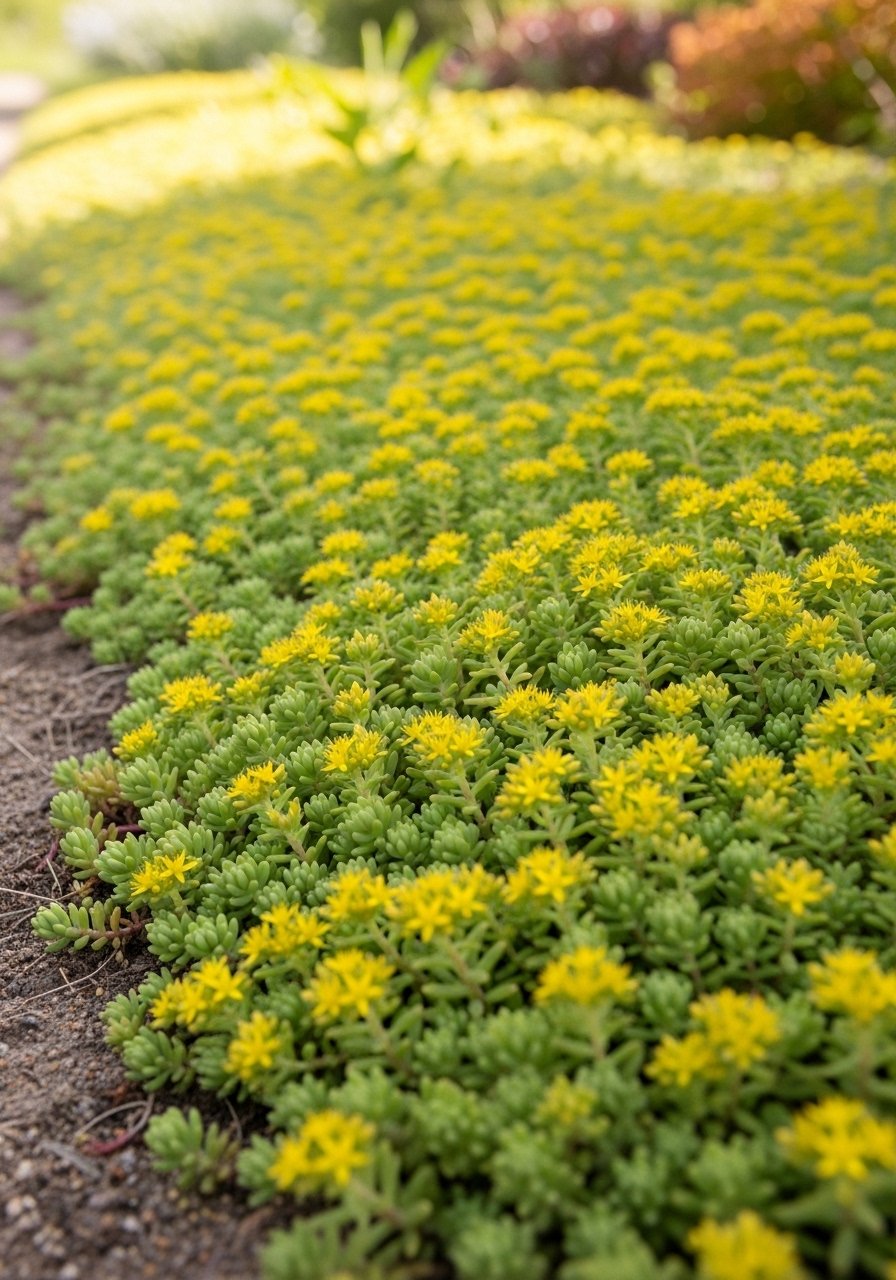
Sedum acre is a tiny workhorse that I used to patch a dry bank. The yellow flowers are like confetti in summer and it hugs the ground closely.
I once let it migrate into a rock garden too far—my fault for not edging. Now I use a narrow barrier when I want containment. It’s otherwise very low fuss and summer-hardy.
What You’ll Need for This Look
- Sedum acre plants (goldmoss stonecrop)
- Narrow landscape edging (to contain spread)
- Sunny gritty soil mix (for hot banks)
21. Dappled Shade Carpet with Sweet Woodruff
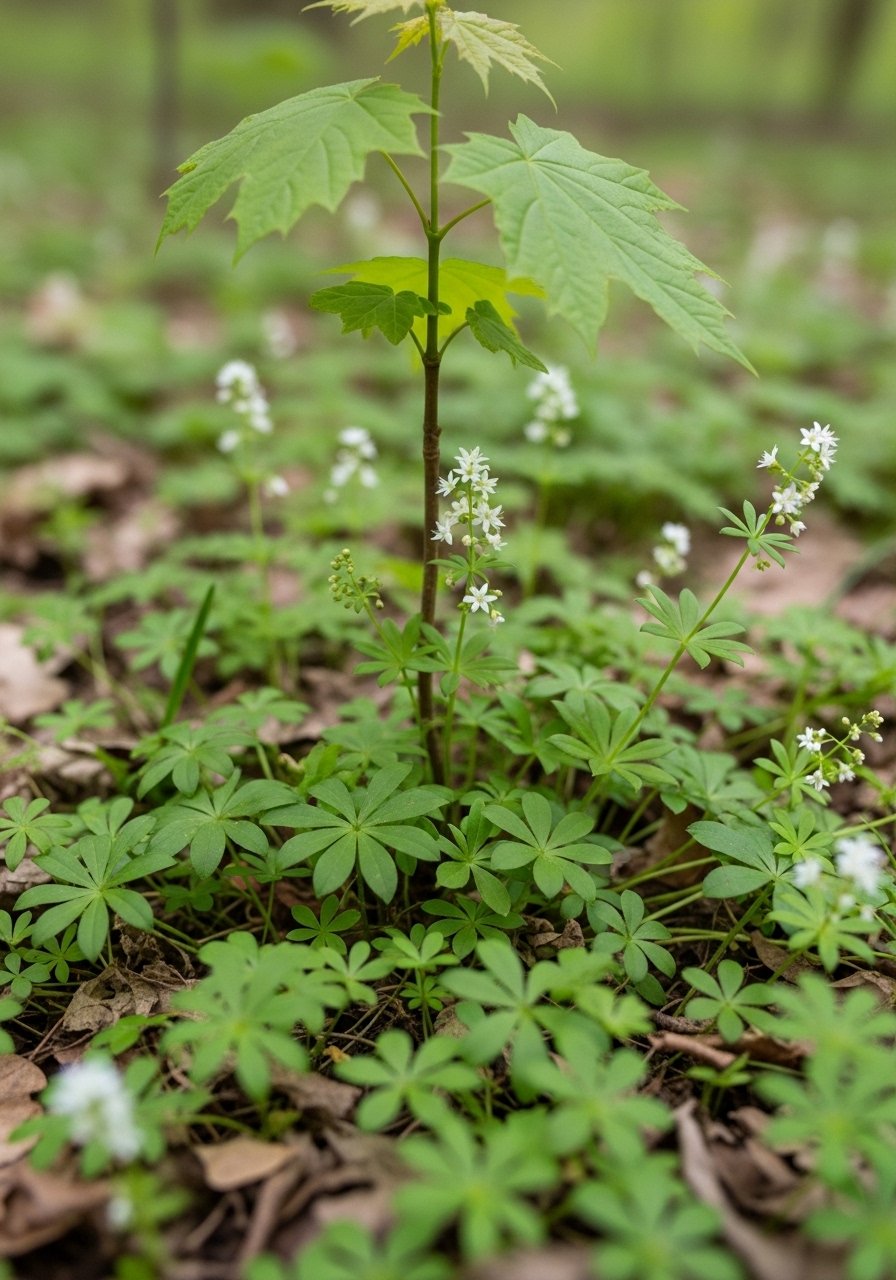
Sweet woodruff made a cool, soft sheet under my birch where grass fought to survive. It tolerates deep shade and looks delicate when flowering, but it’s tougher than it looks.
It dies back in summer heat to an extent but returns reliably in cool, moist shade. I scatter a light mulch over it and let it be an understated carpet.
What You’ll Need for This Look
- Sweet woodruff plants (Galium odoratum)
- Leaf mold mulch (for shade beds)
- Mulch fork (for light application)
22. Trailing Campanula for Soft Blue Spill
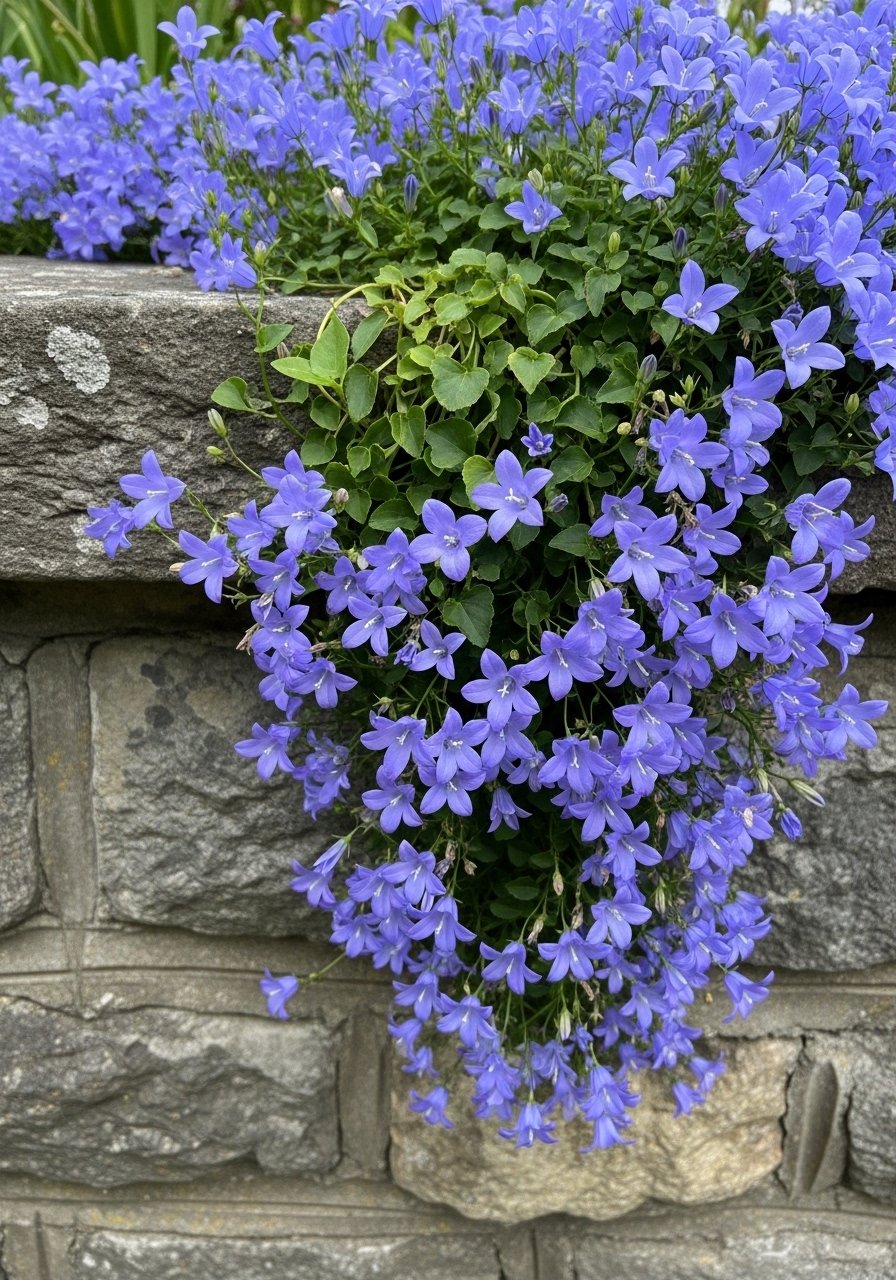
I have a low wall where Campanula spills over like soft blue fabric. The bell-like flowers show in late spring and early summer and the plant hugs the stone nicely.
It likes cooler summers and consistent moisture. I position it where it can drape without being trampled and it returns year after year with little fuss.
What You’ll Need for This Look
- Campanula poscharskyana plants (trailing bellflower)
- Low garden wall stones (for spill-over)
- Watering can (long spout for wall planting)
Final Thoughts
You don’t need every plant here. Pick a few that match your light and soil and let them do the work.
I plant for texture and reliability, not perfection. Start small, enjoy the blooms, and learn as the groundcovers settle in.
Leave a Reply