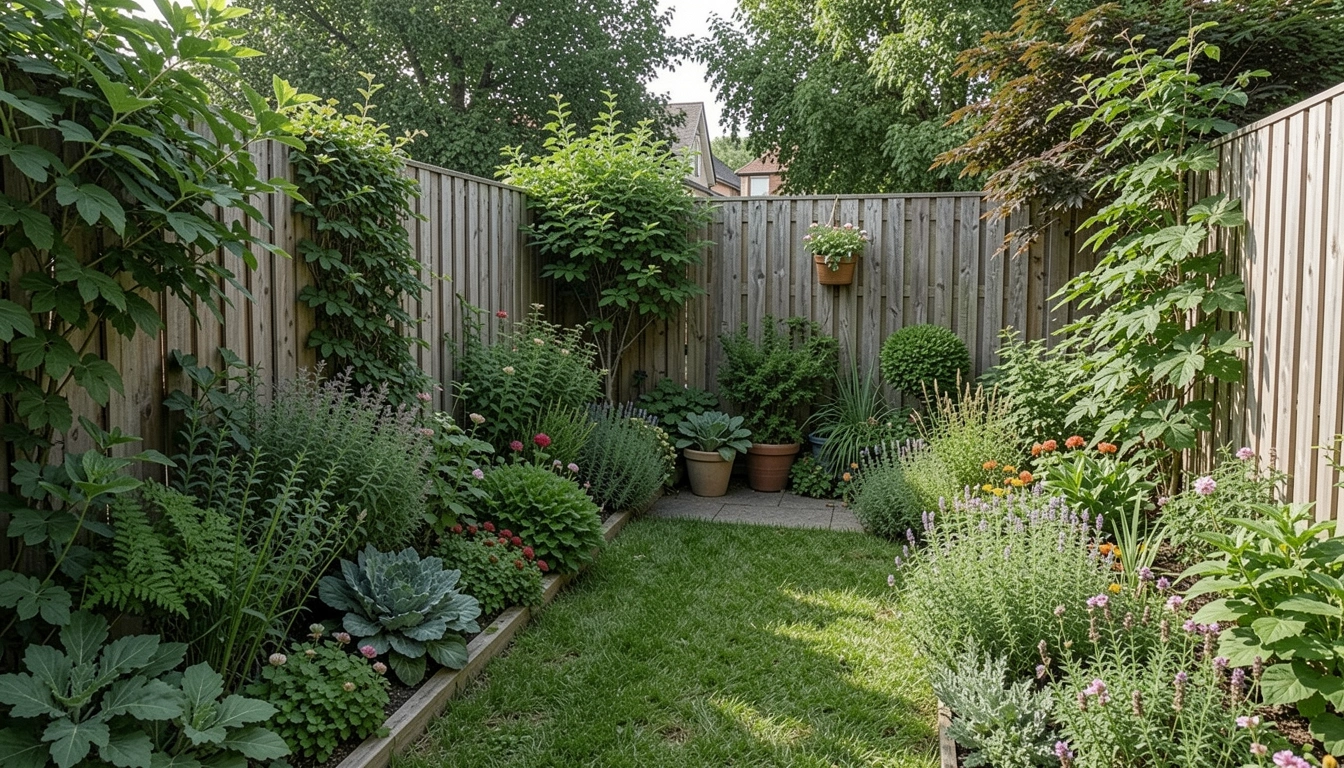
I looked at my backyard last spring. The low fence let neighbors peek over while I sat with coffee. It felt exposed, not restful. I needed privacy without building walls.
I tried tall plants first. They blocked views but left gaps. Then I layered in screens and climbers. Now it feels enclosed, quiet.
You can do this too. It takes feel more than work.
How To Make Garden Privacy Easy
This is the method I use when a yard feels too open. You'll end up with a balanced, secluded spot that screens views naturally.
What You’ll Need
- 6ft bamboo privacy screen, natural reed fencing
- 4ft metal garden trellis, black powder-coated steel
- Fast-growing English ivy plant, 1-gallon pot
- Tall arborvitae evergreen shrub, 3ft height
- Privacy fabric mesh, 6x50ft green shade cloth
- Large terracotta planters, 24-inch diameter
- Organic garden mulch, 2 cubic feet bag
- Heavy-duty garden stakes, 3ft galvanized steel
Step 1: Walk Your Perimeter and Spot Weak Views

I start by walking the edge of my yard slowly. I sit where I relax most, then look back at fences or hedges. Note where eyes peek in—over low spots or through bare areas. This shows the real trouble zones.
Visually, the yard shifts from open to mapped. You see lines that need height.
People miss how views change by season. Bare winter branches reveal more. Avoid rushing—mark spots with string first.
I use 6ft bamboo privacy screen stakes here to test heights. It feels right when you can't see past it from your chair.
Step 2: Place Tall Anchors for the Back Layer

I grab my tallest pieces next. Lean 6ft bamboo privacy screen against fences where views are worst. Secure with heavy-duty garden stakes. Add tall arborvitae evergreen shrub in large terracotta planters.
The space looks taller instantly. Backdrop feels solid.
Most overlook wind—screens flap without stakes. Stake deep.
It balances when anchors line up with your sightline. Sit and check.
Step 3: Layer Mid-Height with Trellis and Fabric

I add 4ft metal garden trellis between tall anchors. Drape privacy fabric mesh loosely. It softens gaps without bulk.
Views blur now. Mid-layer adds depth.
Folks forget curve—straight lines feel rigid. Angle trellis slightly.
From my chair, it flows. No harsh blocks.
Step 4: Plant Climbers to Fill and Soften

I plant fast-growing English ivy at trellis feet. Guide stems up gently. Mulch around with organic garden mulch.
Greens weave in months. Edges look alive.
People plant too close—climbers tangle. Space 2 feet apart.
It feels enclosed when vines touch anchors. Natural hold.
Step 5: Check Balance from Your Spot

I sit in my favorite chair last. Adjust anything poking views. Tweak pots or fabric.
The whole yard settles. Balanced heights screen fully.
Missed insight: light shifts daily. Check morning and evening.
Avoid overfill—gaps let air flow. Breathe easy.
Picking Plants for Privacy
I stick to tough growers in my yard. Evergreens hold year-round. Climbers fill fast.
- Arborvitae for height—stays dense.
- Ivy or clematis for coverage—no fuss.
- Avoid finicky blooms; they drop.
Test soil first. Wet spots need different roots. Mine thrive in average dirt.
Keeping Privacy Low Maintenance
Once set, it runs itself. Water new plants weekly first month. Then rain handles.
Trim climbers yearly. Mulch smothers weeds.
- Stake loose screens after storms.
- Check fabric tears in fall.
I spend 10 minutes monthly. Feels effortless.
Privacy in Small Yards
Tight spaces work best with pots. Move large terracotta planters as needed.
Layer vertical. Trellis uses no ground.
My corner nook went from bare to cozy. Scale to fit.
Final Thoughts
Start with one weak spot. Add layers slow.
You'll see it shift to private quick. Trust your eye from the chair.
Your garden feels yours now. Sit back.
Leave a Reply